
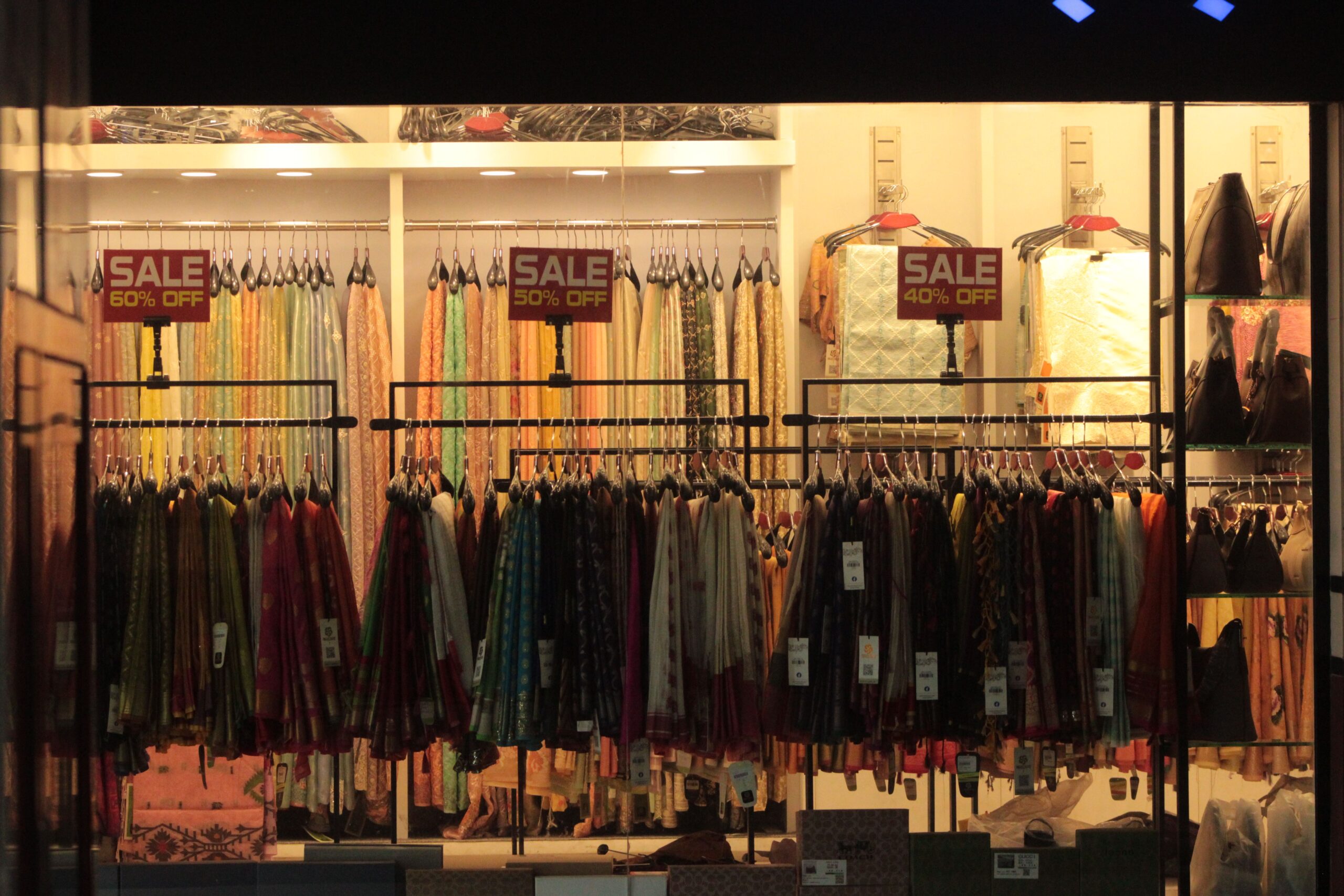

A Commercial Anatomy of How Fashion Reaches the World
Who owns the inventory, controls the price, meets the customer, captures the data, and carries the risk?
One Garment, Many Businesses
At 9:15 on a Monday morning in Paris, a buyer enters a showroom and commits a department store to 600 units from a collection that will not reach consumers for another six months.
At 12:40, a customer in Lagos walks into a mono-brand boutique, tries on a jacket, and pays the full ticket price.
At 4:05, a creator in Jakarta demonstrates the same jacket during a livestream. Viewers ask about the fit in real time. A countdown appears. Orders arrive without anyone leaving the video.
At 7:30, a subscriber in London exchanges three rented pieces for four new ones. The garments have already generated revenue through several previous rotations.
At 10:10, an authenticated second-hand version sells in New York. The original brand may earn nothing from that transaction—or it may operate the resale programme, collect a fee, regain the customer, and recover data about the product’s value after first ownership.
All five events are fashion sales. They do not merely use different channels. They represent different systems of demand, ownership, cash flow, risk, service, and power.
That distinction matters because fashion companies often describe their commercial model too casually. They say, “We are wholesale.” “We are direct-to-consumer.” “We sell online.” “We are omnichannel.” None of these statements is complete. A website can operate as wholesale, owned retail, a marketplace, a concession, a preorder system, a rental platform, or a resale exchange. A department store can buy inventory outright, hold it on consignment, provide space for a concession, or host a shop-in-shop under a hybrid agreement. A social platform can be an advertising medium, an affiliate channel, a marketplace, a live sales floor, or all four at once.
The professional question is not simply Where was the product sold? It is:
What commercial architecture turned desire into revenue, and who carried each obligation before and after the transaction?
This in-depth article builds that architecture from first principles. It maps the established forms of fashion sales, explains the hidden economics beneath them, and shows why the strongest fashion companies do not choose one channel. They design a portfolio in which each form of sale performs a specific job.
Why the form of sale matters now
The commercial environment is making architecture more important, not less. The Business of Fashion–McKinsey State of Fashion 2026 describes a market shaped by tariff disruption, changing consumer priorities, rapid technology shifts, and another year of projected low single-digit global growth.[17] When easy growth disappears, channel quality becomes visible. Companies can no longer disguise weak full-price demand with indiscriminate distribution, confuse marketplace GMV with revenue, or celebrate DTC gross margin without counting acquisition and returns. The winning question changes from “Where can we sell more?” to “Which system creates durable demand and cash without weakening the product or the brand?”
Part I — Learning to See the Sales System
1. A Channel Is Not a Business Model
Fashion sales become confusing when several different ideas are compressed into the word channel. To see the market clearly, separate five decisions.
1.1 Who is the contractual customer?
In B2B, the brand sells to a retailer, distributor, franchisee, corporate buyer, or another intermediary. The immediate customer is not the person who will wear the product.
In B2C, the brand or retailer sells to the end consumer through a store, site, app, concession, client adviser, social platform, or event.
In C2C, one consumer sells or rents to another, usually through a platform that creates trust, payment, discovery, and sometimes authentication.
In B2B2C, a platform or retail partner sits between the brand and consumer while the brand remains operationally involved in price, assortment, fulfilment, or service. Many marketplace, concession, dropship, and partner-programme arrangements live here.
1.2 Who owns the inventory before the consumer buys?
This is the first great dividing line.
In conventional wholesale, the retailer buys the goods and normally assumes inventory risk. In owned retail, the brand keeps that risk. In consignment and concession models, the brand may continue to own the goods even though they sit in another company’s physical or digital environment. In a marketplace, the third-party seller may own and fulfil the stock while the platform earns commission. In made-to-order, the finished inventory may not exist until demand is committed.
Inventory ownership determines cash requirements, markdown exposure, decision rights, and often accounting treatment. It is therefore more important than the superficial location of the checkout button.
1.3 Who controls the consumer proposition?
Control can include:
The selling price and promotion calendar.
Which styles, colours, and sizes are shown.
Product photography and editorial presentation.
Store environment and service standard.
Customer data and permission to remarket.
Delivery promise, return policy, and after-sales service.
A brand may gain distribution while losing control of these elements. That can be a good exchange, but only when it is deliberate.
1.4 When is demand committed relative to production?
Fashion can be sold:
Before production, through wholesale orders, preorders, trunk shows, deposits, crowdfunding, or made-to-order commitments.
From finished stock, through full-price retail, marketplaces, replenishment, and immediate delivery.
After first ownership, through resale, consignment, trade-in, repair, remaking, and rental rotations.
The timing of the sale determines how much forecasting the company must do and how much speculative inventory it must finance.
1.5 What is the customer buying?
The answer is not always permanent ownership of a new item. The customer may buy access for a period, a membership, a styling service, a reservation, a customised product, a repair, an authenticated pre-owned piece, or the right to participate in a scarce release.
This is the deepest lesson in the chapter: fashion sales are not a list of places. They are combinations of rights, responsibilities, and risks.
2. The Master Map of Fashion Sales
The industry can be understood through a practical taxonomy. The forms overlap, but each has a distinct commercial centre of gravity.
| Form | Immediate buyer | Inventory before final sale | Primary revenue mechanism | Strategic job |
| Conventional wholesale | Retailer | Retailer after delivery/title transfer | Product revenue at wholesale price | Reach and volume |
| Agent-led wholesale | Retailer | Usually retailer | Product revenue less agent commission | Market access without a full local team |
| Distribution | Distributor | Distributor | Sale to distributor | Territory coverage and local execution |
| Franchise | Franchisee or consumer, depending structure | Usually franchisee/operator | Product margin, fees, and/or royalties | Capital-light store expansion |
| Licensing | Licensee | Licensee | Royalty and sometimes design/service fees | Category or geographic extension |
| Owned stores | Consumer | Brand/retailer | Gross product sales | Control, experience, data, margin pool |
| Owned e-commerce | Consumer | Brand/retailer | Gross product sales | Scalable direct reach and data |
| Concession | Consumer | Usually brand | Product sales less host commission/fees | Direct control inside another retailer |
| Consignment | Consumer | Consignor/brand until sale | Commission or net sales share | Reduce buyer inventory commitment |
| Marketplace/partner model | Consumer | Seller or brand | Commission, fees, services; sometimes product margin | Assortment breadth and asset-light scale |
| Dropship | Consumer | Brand/vendor | Wholesale margin or commission, depending contract | Expand assortment without retailer stock |
| Social and live commerce | Consumer | Brand, merchant, or creator partner | Product margin plus affiliate/platform economics | Convert attention in the moment |
| Preorder/trunk show | Consumer | Not yet produced or reserved | Deposit and later balance | Demand validation and scarcity |
| Made-to-order/bespoke | Consumer | Materials/work in progress | Product and service margin | Fit, craft, exclusivity, low finished-goods risk |
| Off-price/outlet | Consumer or off-price buyer | Brand or off-price retailer | Discounted product sales | Inventory recovery and value segment |
| Flash sale/liquidation | Consumer or liquidator | Varies | Discounted sales or bulk recovery | Rapid stock conversion |
| Resale | Consumer, dealer, or platform buyer | Seller/consignor/platform | Commission, spread, fees, services | Monetise second and later lives |
| Rental/subscription | Member or renter | Rental operator/brand/peer owner | Rental fee or recurring subscription | Revenue per use rather than per unit sold |
| Repair/remaking | Product owner | Product owner/operator temporarily | Service fee and/or remade-product sale | Extend life and deepen relationship |
The table is a map, not a menu. A global brand may use almost every form at once. Ralph Lauren, for example, describes an integrated system spanning owned stores, outlet stores, digital commerce, wholesale, third-party digital partners, licensed operations, and concession-based shop-within-shops. In its concession model, the company states that it continues to own inventory until the ultimate consumer sale and generally employs the sales staff itself.[1] The important fact is not that these formats coexist. It is that they allocate control and risk differently.
3. The Five Flows Behind Every Sale
To diagnose any fashion sales arrangement, trace five flows from beginning to end.
Product flow
Who manufactures, imports, warehouses, allocates, picks, packs, ships, receives returns, repairs, and disposes of the product?
Cash flow
Who pays whom, at what moment, in what currency, with what deductions? Wholesale may generate a receivable weeks or months after delivery. Direct e-commerce can collect cash at checkout but later refund it. A marketplace may settle net of commission. A preorder may collect a deposit before production.
Information flow
Who sees the consumer, the basket, the conversion rate, the return reason, and the product-level sell-through? A brand can record impressive sell-in to a retailer while remaining almost blind to sell-out. Conversely, a direct channel can produce abundant first-party data but also create expensive obligations to acquire, serve, and retain each customer.
Decision flow
Who decides the assortment, price, markdown, campaign timing, replenishment, placement, and customer remedy? Contractual control and practical control are not always the same. A brand may retain formal approval rights but lack the operational leverage to enforce them.
Risk flow
Who carries demand risk, inventory obsolescence, credit risk, currency risk, fraud, returns, duty, damage, authenticity claims, and reputational harm?
These flows reveal why two sales channels with the same top-line revenue can produce radically different economics. They also expose agreements that look attractive only because one party’s costs are hidden in another part of the system.
Part II — Selling Into the Trade
4. Conventional Wholesale: Selling the Collection Before the Consumer Sees It
Wholesale is the commercial engine that built much of modern fashion distribution. The brand sells goods to a retailer, which then sells them to the consumer. In its cleanest form, the retailer takes title to the inventory, sets the consumer offer within agreed boundaries, and earns the retail margin in exchange for providing capital, demand access, merchandising, stores or digital traffic, fulfilment, and service.
Wholesale is often described as giving away margin. That is only half true. The brand receives a lower unit price, but it also transfers or avoids many retail costs: store leases, local staff, consumer acquisition, last-mile delivery, returns processing, payment fraud, and part of the markdown exposure. Wholesale is not “less profitable DTC” by definition. It is a different bundle of economics.
4.1 The seasonal sell-in cycle
A traditional fashion wholesale cycle moves through the following sequence:
Merchandising architecture. The brand defines the collection, price ladder, option count, colour story, delivery windows, carryover products, and target account strategy.
Market preparation. Samples, line sheets, lookbooks, digital assets, wholesale prices, recommended retail prices, minimums, and terms are prepared.
Market appointments. Buyers visit showrooms, trade fairs, fashion weeks, or virtual showrooms. They review the range against their own customer profile and open-to-buy budget.
Order capture. The retailer commits by style, colour, size, delivery window, and quantity. Orders may be subject to confirmation, minimum thresholds, or production feasibility.
Production and allocation. The brand aggregates orders, adds its own forecast where appropriate, places production, and later allocates constrained goods.
Delivery. Product must arrive inside contractual windows, correctly packed, labelled, ticketed, documented, and compliant. Late, incomplete, or non-conforming delivery can trigger cancellations, deductions, or chargebacks.
Sell-out. The retailer presents the product to consumers. The brand watches weekly sell-through where data sharing allows it and may support reorders, marketing, training, or markdown decisions.
Settlement and learning. Invoices are paid subject to terms and deductions; the brand compares sell-in with sell-out and uses the result to plan the next market.
The novice watches the order book. The professional watches the quality of the order book.
4.2 Sell-in is not sell-through
Sell-in is what the brand sells to the trade. Sell-out is what the retailer sells to the end consumer. Sell-through is the proportion of available inventory sold during a stated period.
A brand can grow sell-in by persuading retailers to buy more, opening marginal accounts, or shipping inventory early. If consumer demand does not follow, the system eventually pays through markdowns, returns, cancellations, lower future orders, distressed resale, or damaged brand equity.
Healthy wholesale therefore asks:
Did the right accounts buy the right depth?
Is distribution consistent with the brand’s price and positioning?
Are key products selling at full price?
Is replenishment demand emerging?
Are weeks of supply and size availability balanced?
Are accounts paying on time and respecting presentation standards?
The best wholesale relationship is not a shipment. It is a shared demand system.
4.3 Prebook, at-once, and replenishment
Wholesale itself contains different forms of sale.
Seasonal prebook orders are placed before the selling season, often while production is still being planned. They give the brand demand visibility and give the retailer access to the intended collection.
At-once or immediate orders draw from available stock. They are useful for trend response, missed demand, or smaller retailers unwilling to commit far ahead.
Replenishment applies to proven core products. Sales data triggers repeated orders for styles such as signature shirts, denim, underwear, footwear, or permanent accessories. Ralph Lauren’s filings, for example, describe replenishment programmes for core products alongside seasonal wholesale.[1]
Never-out-of-stock programmes deepen this logic: the supplier commits to availability and rapid replenishment, while the retailer reduces initial depth. The reward is steadier volume; the cost is that the brand carries more forecast and service risk.
4.4 The contract beneath the handshake
The wholesale agreement determines whether growth creates value. Professionals pay attention to:
Incoterms, freight responsibility, duty, and title transfer.
Currency and exchange-rate exposure.
Payment terms, credit limits, deposits, and security.
Order cancellation rights and delivery tolerances.
Minimum order values and pack-size rules.
Returns, stock rotation, and defective merchandise.
Markdown money, rebates, co-op marketing, and retrospective discounts.
Chargebacks for ticketing, routing, packaging, timing, or data errors.
Territory, channel, and exclusivity restrictions.
Approved doors and restrictions on marketplaces or off-price resale.
Consumer-data and sell-through-data sharing.
Intellectual-property use and brand presentation.
Gross wholesale sales are therefore not the number to celebrate. The operator calculates net realised wholesale revenue after returns, allowances, discounts, markdown support, commissions, freight obligations, and bad debt, then compares it with the cost and working capital required to serve the account.
5. Agents, Distributors, Franchises, and Licensees
These models are often grouped together as “international sales,” yet they perform different work.
5.1 Sales agents
An agent introduces the brand, manages local relationships, helps sell the collection, and earns commission. The agent typically does not buy or own the inventory. The brand invoices the retailer and carries customer credit, production, and much of the commercial risk.
Agents are valuable when relationship capital matters: understanding local buyers, calendars, language, market etiquette, and account quality. They are less useful when the brand expects them to compensate for weak product-market fit, unclear pricing, or unreliable delivery.
The agent provides access; the brand still needs a business.
5.2 Distributors
A distributor buys goods from the brand and resells them within a territory. It may import, warehouse, market, sell, collect cash, and sometimes operate stores or e-commerce. Compared with an agent, the distributor assumes more operational and inventory responsibility. In exchange, it requires a larger economic spread and greater decision rights.
Distribution is effective when the market is operationally difficult or too small for direct investment. Its risks are strategic distance, weak consumer data, inconsistent brand presentation, underinvestment, parallel trade, and dependency on one local partner.
A serious distribution agreement defines not only annual minimum purchases but also:
Door plan and account quality.
Marketing investment and local content.
Inventory age and exit rules.
Pricing corridors and promotion governance.
Reporting cadence and data standards.
Sub-distribution and online marketplace permissions.
Anti-diversion controls.
Renewal, performance cure, and termination transition.
5.3 Franchising
Franchising transfers the right to operate a branded retail format under defined standards. The franchisee typically invests in premises, people, and local operations. The brand may earn initial fees, royalties, product margin, marketing contributions, or a combination.
The key asset is not the logo. It is a replicable store system: location criteria, assortment logic, visual merchandising, training, technology, service, pricing, inventory, and audit.
Franchising can accelerate store expansion with less corporate capital. It can also replicate inconsistency at scale. The more emotional and premium the brand promise, the more exacting the operating system must be.
5.4 Licensing
Licensing allows another company to use the brand’s intellectual property for a territory or product category—eyewear, fragrance, watches, children’s wear, home, or specialised outerwear are common examples. The licensee designs, sources, distributes, or sells under agreed approval systems and pays royalties, often with guaranteed minimums.
Licensing converts brand equity into relatively capital-light income and accesses capabilities the brand does not possess. But it creates a profound governance problem: the licensee is monetising an asset whose long-term value belongs to the licensor.
The central test is therefore not “How much royalty can we earn?” It is “Will the product, price, distribution, and communication increase or consume brand equity?” PVH’s recent transition of some licensed categories back in-house illustrates that licensing and owned operations are strategic choices that can be reversed as capability and margin priorities change.[2]
6. Digital Wholesale and the Hybrid Trade
The wholesale showroom has not disappeared; it has acquired a digital layer. Virtual showrooms, B2B ordering platforms, 3D samples, product data feeds, and collaborative planning tools allow buyers to inspect assortments, build orders, compare historical performance, and reorder without depending on a single physical market week.
Digital wholesale improves speed and information, but it does not remove the human work of editing a collection. Buyers still need a reason to believe in the product, confidence in delivery, and clarity about how the assortment will work in their stores.
The modern trade is hybrid:
Physical appointments establish trust, touch, proportion, and storytelling.
Digital tools carry option data, imagery, order logic, and remote access.
Retail sell-through feeds support replenishment and future buys.
Virtual samples reduce some sampling cost but do not eliminate the need to verify material and fit.
Ralph Lauren reports using primary and regional showrooms as well as virtual showrooms, while its wholesale partners increasingly sell through their own digital sites.[1] This is the pattern to understand: wholesale is no longer synonymous with physical retail. A wholesale customer can be a digital pure player; a conventional department store can be a digital seller; and a brand’s product can move through a wholesale contract while the consumer experiences a seamless online interface.
Part III — Direct and Hosted Retail
7. Owned Stores: The Physical Theatre of the Brand
An owned store is simultaneously a sales channel, media environment, service operation, inventory node, research site, and statement of confidence. Its economics cannot be understood through transactions alone.
7.1 Flagships
A flagship makes the brand legible at maximum resolution. It may carry broad assortment, host events, display craft, create tourism, launch collaborations, and influence how wholesale partners present the brand. Its rent and build-out can be difficult to justify by store-level profit alone; part of the return may appear in brand heat, client recruitment, e-commerce, or regional wholesale.
This does not mean flagship economics should be romanticised. The company must explicitly separate four returns:
Direct store contribution.
Customer acquisition and lifetime value.
Media and experiential value.
Network effects on nearby digital and wholesale sales.
Without that discipline, “brand investment” becomes a place where bad retail hides.
7.2 Full-price boutiques and mono-brand stores
These are the recurring retail expression of the brand. They provide control over service, assortment, price, clienteling, and data. They also impose fixed costs, local management complexity, shrink risk, and the burden of getting inventory to the right door in the right sizes.
The store’s true job depends on the category. Luxury boutiques may prioritise private relationships and high-value conversion. Athletic stores may demonstrate innovation and community. Fast-fashion stores may function as high-frequency discovery and fulfilment nodes. A bridal salon sells confidence through consultation and alterations. The format must follow the purchase problem.
7.3 Pop-ups and temporary retail
Pop-ups compress a store into a campaign, test, launch, or cultural moment. They can validate a market, create urgency, activate a collaboration, serve an event, or reach a neighbourhood without a long lease.
Their apparent simplicity is deceptive. Temporary permits, short-term build costs, staffing, local stock, payments, loss prevention, and data capture can make a beautiful pop-up commercially weak. The professional defines the objective before selecting the site: revenue, customer acquisition, press, product test, wholesale support, or community.
7.4 Outlet and factory stores
Outlet stores are not merely discounted boutiques. They can serve as a controlled secondary channel for excess and out-of-season merchandise, a permanent value proposition with outlet-specific product, or a hybrid of both. Ralph Lauren explicitly describes outlets as a secondary distribution channel for excess and out-of-season products, while also sourcing products from suppliers and other operations.[1]
The more product is manufactured specifically for outlet, the more outlet becomes its own market and merchandising system—not simply an inventory clean-up tool.
7.5 The store as a node
In a mature omnichannel system, a store may fulfil online orders, enable click-and-collect, accept cross-channel returns, book appointments, ship stock to another location, support endless-aisle orders, and host livestreams. Its inventory is no longer economically confined to its walls.
Inditex reported €10.7 billion in online sales for 2025 while emphasising the integration of store and online operations across 5,460 stores.[3] The strategic point is not the online share. It is that the network is managed as a connected system.
8. Brand E-Commerce: Owning the Digital Storefront
Owned e-commerce promises global reach, direct data, pricing control, and a higher gross selling price than wholesale. It also turns the brand into a technology, media-buying, fulfilment, customer-care, fraud, and reverse-logistics company.
8.1 What the brand gains
Control of assortment, imagery, storytelling, and launches.
First-party behavioural and transactional data, subject to law and consent.
Direct testing of price, product, content, and demand.
Ability to build loyalty, membership, clienteling, and personalised service.
A channel for long-tail sizes, colours, and products that stores cannot stock deeply.
8.2 What the brand assumes
Customer acquisition cost.
Site and app development, availability, cybersecurity, and payments.
Product content, localisation, and merchandising.
Pick-pack-ship cost and delivery promises.
Returns, refunds, exchanges, and fraud.
Cross-border duties, tax, consumer law, and product compliance.
The risk that easy promotion trains the customer to wait.
The digital P&L is frequently misread because gross margin is visible and service costs are dispersed. A direct order is not economically complete at checkout. It is complete only after payment risk, fulfilment, return probability, support cost, and future customer value are considered.
8.3 Localisation is commercial design
Translating a site is not the same as entering a market. Effective localisation includes:
Local currency and psychologically appropriate price points.
Preferred payment methods and instalments.
Duties-inclusive or duties-unpaid delivery clarity.
Local sizing, fit guidance, and imagery.
Climate, calendar, modesty, and cultural relevance.
Delivery speed, collection points, and return options.
Local customer care and legal information.
Ralph Lauren describes localising language, currencies, payment methods, assortments, and content as it expands digital access.[1] That list is a compact definition of what cross-border fashion commerce actually requires.
9. Department Stores, Specialty Retailers, Concessions, and Shop-in-Shops
The consumer may see a branded space inside a department store. Behind the fixtures, four very different models may exist.
9.1 Wholesale door
The department or specialty store buys the inventory and resells it. The retailer owns the customer transaction, normally controls staff, and earns the retail spread. The brand may fund fixtures, training, marketing, or markdown support.
9.2 Shop-in-shop
A shop-in-shop is primarily a presentation format: a defined branded environment inside a larger store. It can sit on top of wholesale, concession, consignment, or another contract. The visual format does not tell you the inventory economics.
9.3 Concession
In a concession, the brand operates within the host retailer’s space and normally retains greater control of inventory, staff, assortment, and price. The host provides location, traffic, and shared infrastructure in exchange for commission, rent, fees, or a combination.
Ralph Lauren’s 2026 filing offers an unusually clear description: for its concession-based shop-within-shops, inventory remains owned by Ralph Lauren until sale to the consumer, and salespeople are generally its employees rather than the department store’s.[1]
9.4 Consignment
Under consignment, goods are placed with a retailer but ownership stays with the consignor until sale or another agreed event. The retailer pays after sell-through and keeps a commission or agreed share.
Consignment lowers the retailer’s inventory commitment and can open doors for emerging brands. But the brand finances stock, waits for cash, depends on accurate reporting, and may recover aged or shopworn goods. Controls over count, insurance, damage, markdown, transfer, reporting, and reconciliation are essential.
9.5 Why hosted retail remains powerful
Multi-brand retailers solve a customer problem that a mono-brand store cannot: comparison and curation across brands. They also provide local trust, traffic, service, and market knowledge. A strong specialty retailer can introduce an unknown designer with more authority than the designer’s own advertising.
The brand therefore chooses partners not only for order size but for context. Who sits beside the product? What customer enters the door? What pricing behaviour is normal there? What editorial story will the retailer tell? Distribution is part of positioning.
10. Marketplaces, E-Tailers, Partner Programmes, and Dropship
Digital retail requires precise language because the same consumer interface can conceal different commercial models.
10.1 Digital wholesale
The e-tailer buys the product, owns inventory, and resells it. This is wholesale conducted by a digital retailer. The brand benefits from reach and avoids some operating costs but has less control over pricing, customer data, and presentation.
10.2 Marketplace
Third-party sellers list products on a platform. The seller may set price, own inventory, and fulfil orders; the platform provides discovery, transaction infrastructure, trust, traffic, advertising, and sometimes logistics. Revenue can include commission, fulfilment fees, subscription fees, advertising, and payments.
The distinction between gross merchandise value (GMV) and revenue is crucial. GMV represents the value of goods transacted through the platform; platform revenue may be only the commission and services earned. Accounting standards distinguish a principal that controls the product before transfer and reports gross consideration from an agent that arranges the transaction and reports its fee or commission.[4]
10.3 Partner programme or e-concession
The brand sells directly to the platform’s consumer while using the platform’s traffic and interface. Depending on the agreement, the brand may control price, assortment, and inventory, while the platform receives commission and may provide fulfilment or customer service. Zalando describes its ecosystem as combining wholesale with partner and connected-retail models that provide direct-to-consumer access.[5]
10.4 Dropship
The retailer displays and sells the product but the brand or vendor holds the stock and ships the order. Dropship expands assortment without requiring the retailer to buy and warehouse every item. It also creates operational dependencies: inventory feeds must be accurate, service-level agreements must be met, packaging must support the retailer promise, and returns need an agreed path.
10.5 The marketplace bargain
A marketplace can deliver enormous reach. In return, the brand may accept:
Commission and fulfilment fees.
Competition beside substitute products.
Platform search and advertising dependence.
Restricted customer data.
Pricing transparency across markets.
Counterfeit, diversion, or unauthorised-seller complexity.
Operational scores that affect visibility.
The professional does not ask, “Should we be on marketplaces?” The professional asks:
Which marketplace, for which product, in which territory, under which inventory and fulfilment model, with which data rights, and for what strategic purpose?
11. Omnichannel: When the Customer Stops Seeing the Organisation Chart
Multichannel means the company sells in several places. Omnichannel means those places behave as one system from the customer’s perspective.
A customer may discover a product on social media, inspect it in a store, order another size through an app, collect it near work, return it by courier, and later resell it through a brand programme. The customer experiences one relationship. Internally, the journey may cross marketing, store operations, e-commerce, inventory, payments, tax, logistics, and customer care.
Real omnichannel capability requires:
A trusted product and inventory record.
Order management across nodes.
Customer identity and consent across touchpoints.
Cross-channel payment, return, and refund logic.
Allocation rules that protect both service and margin.
Incentives that do not make stores resist digital orders.
Financial attribution that recognises assisted journeys.
The technology is difficult. The incentive design is often harder. If a store receives no credit for helping a customer buy online, staff may protect “their” inventory and revenue. If e-commerce can consume store stock without considering walk-in demand, local service suffers. Omnichannel succeeds when the company stops rewarding channels as rival kingdoms.
Part IV — Selling Through Attention, Scarcity, and Commitment
12. Social Commerce, Creator Sales, Messaging, and Livestreams
Traditional e-commerce separates media from transaction: advertising creates interest, the customer visits a store, and checkout occurs later. Social commerce shortens or removes that distance.
12.1 Four distinct social sales models
Social referral. Content sends traffic to the brand or retailer site. The platform is principally a discovery and advertising environment.
Affiliate and creator commerce. A creator earns commission or a fixed fee for attributable sales. The brand gains trusted reach but must govern claims, disclosure, brand fit, fraud, and incrementality.
Native social checkout. Product discovery, product detail, and payment occur inside the social platform. The platform becomes part of the transaction system.
Livestream commerce. A host demonstrates products, answers questions, creates entertainment and social proof, and enables immediate purchase. Research in fashion livestreaming suggests that interaction with the seller and other viewers can reduce product uncertainty by supplying information that consumers previously sought from in-store staff.[6]
12.2 Why live commerce is not television shopping with a phone
The differentiator is not video. It is reciprocal participation. The host can respond to fit questions, compare colours, change the demonstration, acknowledge viewers, and observe demand while the show is running. The audience also supplies reviews, urgency, and social presence.
This turns selling into performance, service, and market research at once.
12.3 The unit economics of attention
Social sales require more than views. The operator tracks:
Qualified viewers and watch time.
Product clicks and add-to-cart rate.
Conversion during and after the session.
Average order value and units per transaction.
Creator fee, affiliate commission, and paid amplification.
Cancellation and return rate by creator or content format.
New-customer rate, repeat rate, and contribution margin.
Incremental sales versus orders that would have occurred anyway.
High conversion can still destroy value if commission, discount, returns, and fulfilment consume the margin. Conversely, a live session with modest immediate sales may be valuable if it generates reusable content, customer insight, and later conversion. The objective must be set before judging the show.
12.4 Messaging commerce and private groups
In many markets, fashion is sold through WhatsApp, WeChat, LINE, Telegram, Instagram messages, and private community groups. The interaction may begin informally—“Do you have this in medium?”—but the operating requirements are formal: identity, product accuracy, payment security, inventory reservation, response time, order record, delivery, and returns.
Messaging is particularly powerful for high-consideration purchases, relationship retail, diaspora commerce, and markets where conversational trust matters more than a polished standalone site.
13. Clienteling, Appointments, Trunk Shows, and Private Sales
Not all fashion selling is designed for anonymous traffic. In luxury, bridal, couture, jewellery, made-to-measure, and high-value accessories, the salesperson can become a portfolio manager of relationships.
13.1 Clienteling
Clienteling combines human memory with permissioned data: preferences, sizes, past purchases, alterations, occasions, wish lists, repairs, and communication choices. The client adviser does not merely announce products. The adviser edits the abundance of fashion into relevance for one person.
The discipline is to make the relationship useful rather than intrusive. Quality is measured by retention, trust, full-price conversion, and share of wardrobe—not by message volume.
13.2 Appointment selling
Appointments allocate time, space, expertise, and product to a customer. They can raise conversion and average order value, support accessibility and privacy, and reduce uncertainty for technical or emotional purchases.
13.3 Trunk shows
A trunk show presents an extended, early, exclusive, or travelling collection for a limited period. It can be physical or digital, and may combine discovery with preorder. Moda Operandi’s online trunk shows typically remain open for two to four weeks, take a deposit at order, and collect the balance when the product arrives from the designer.[7]
Trunk shows do three things at once:
Create privileged access and scarcity.
Reveal demand before broad inventory commitment.
Give smaller-volume or highly expressive products a commercial path.
13.4 Private and employee sales
Invitation-only events can reward clients, activate dormant inventory, or restrict visibility of discounting. But “private” is not a substitute for governance. Screenshots travel, goods are resold, and price memories persist. The brand must know whether the event is relationship-building, inventory recovery, or disguised promotion.
14. Drops, Capsules, Collaborations, and Scarcity Selling
A drop changes the sales calendar from a broad season to a concentrated release. Product, content, community, and availability arrive together. The model is common in streetwear and sneakers but now influences luxury, beauty, sportswear, gaming collaborations, and creator brands.
Scarcity can be:
Natural, because craft, material, or production capacity is genuinely limited.
Planned, through small batches or short selling windows.
Access-based, through membership, invitations, raffles, or loyalty tiers.
Time-based, through countdowns and temporary availability.
Drops can reduce initial inventory, create cultural energy, and make demand visible. They can also generate bots, resellers, disappointed loyal customers, service spikes, and a cycle in which the brand must manufacture ever-louder moments.
The strategic question is whether scarcity amplifies meaning or replaces it. A weak product can be made temporarily hard to buy. That does not make it enduringly desirable.
15. Preorder, Made-to-Order, Made-to-Measure, and Bespoke
These models move the demand signal earlier and finished inventory later.
15.1 Preorder
The customer commits before immediate delivery, sometimes with full payment and sometimes with a deposit. The product may already be in production, planned but not started, or allocated from a future delivery.
Preorder can:
Test demand and guide production depth.
Finance part of the working capital.
Secure scarce sizes or products for customers.
Extend the commercial life of runway or launch attention.
Its danger is broken trust. The brand is selling a promise about product, timing, quality, and communication. Delays, cancellations, inaccurate samples, and refund friction can turn working-capital advantage into reputational debt.
15.2 Made-to-order
Production begins after the order. The product may use standard patterns with selected colours, fabrics, or details. Finished-goods risk falls, but planning shifts to materials, capacity, lead time, and production scheduling.
15.3 Made-to-measure
A base pattern is adapted to the customer’s measurements and preferences. The sale includes product and fit service. Repeatability improves once measurements and pattern adjustments are recorded correctly.
15.4 Bespoke and couture
The product is developed substantially for the individual, often through multiple fittings and extensive handwork. Price reflects craft, time, material, access, and the relationship—not merely a garment’s manufacturing cost.
15.5 The operating inversion
Stock fashion asks, “How much should we make before demand?” Made-to-order asks, “How do we deliver reliably after demand?” The first concentrates risk in inventory. The second concentrates risk in lead time, capacity, quality, and customer expectation.
Part V — Value Sales and the Second Life of Fashion
16. Promotions, Markdowns, Off-Price, Flash Sales, and Liquidation
Discounting is not one form of sale. It is a family of mechanisms with very different strategic meanings.
16.1 Promotion
A promotion changes the offer temporarily to stimulate traffic or conversion: percentage discounts, vouchers, bundles, loyalty rewards, gifts, or free delivery. It may be planned before the product is bought.
16.2 Markdown
A markdown reduces the selling price of a specific product, commonly because its remaining selling time or demand is weaker than expected. Markdown is an inventory decision, not only a marketing event.
16.3 Off-price retail
Off-price retailers buy branded goods opportunistically and sell them below comparable full-price levels, using rapid turns and a “treasure hunt” experience. TJX describes opportunistic buying, relatively lean inventory, frequent turns, and treasure-hunt discovery as key elements of its model.[8]
Off-price is a professional buying system, not a pile of leftovers. Its merchants create value from flexibility, fragmented supply, closeout opportunities, and consumers’ willingness to trade predictable assortment for exceptional value.
16.4 Flash sales
Flash sales concentrate discounted inventory into a limited time window, often online and sometimes membership-based. They create urgency and can protect the main channel by separating the event from the regular store. Repeated too often, they teach customers that the real price is the flash price.
16.5 Liquidation and jobbers
Liquidators, jobbers, and closeout buyers convert aged, cancelled, defective, returned, or excess stock into cash. The recovery may be low, but speed and certainty can be valuable. Contracts must address de-branding, territory, channel restrictions, relabelling, and resale visibility where legally permissible.
16.6 The markdown waterfall
Inventory usually moves through a sequence: full price, controlled promotion, first markdown, deeper markdown, outlet or off-price, bulk liquidation, donation, recycling, or destruction where legal and ethical. Each step sacrifices price to gain probability and speed of sale.
That final qualification is becoming stricter. Under the European Union’s textile strategy, the ban on destroying unsold textiles and footwear began for large enterprises on 19 July 2026, with medium-sized enterprises scheduled to follow in 2030.[18] Inventory exit is therefore becoming a compliance and product-design question as well as a margin decision.
The professional objective is not “zero markdown.” Some fashion risk is intrinsic. The objective is to make the markdown path visible in advance, protect the brand, and learn which decisions created the excess.
17. Resale: When the Product Becomes a Market
Resale converts a fashion item from a one-time unit into an asset with a price history, condition, provenance, and multiple potential owners.
17.1 Peer-to-peer resale
The platform connects individual seller and buyer. The seller photographs, prices, and often ships the item. The platform earns transaction, protection, payment, promotion, or shipping fees. Scale depends on liquidity: enough relevant supply and demand meeting with sufficient trust.
17.2 Managed consignment
The platform or store receives the item, authenticates or inspects it, creates content, stores it, prices it, fulfils the order, and pays the consignor after sale. The service is deeper and the take rate higher because the operator performs more work and carries more liability.
The RealReal’s 2025 results show why GMV and revenue must be separated: it reported $2.13 billion in full-year GMV and $693 million in revenue.[9] The difference is not a weakness; it reflects the economics of facilitating and servicing transactions rather than owning every item as new retail inventory.
17.3 Dealer or trade-in model
The operator buys the item outright or offers store credit, then resells it. The seller gains certainty and speed; the operator assumes pricing and inventory risk and earns the spread.
17.4 Brand-owned resale
A brand can accept trade-ins, certify products, host peer listings, or partner with a resale operator. The strategic benefits include:
Re-entering the relationship after first sale.
Protecting authentication and condition standards.
Learning residual values by product.
Offering an entry price without discounting new goods.
Using trade-in credit to stimulate new purchases.
Designing products for durability, repair, and future transfer.
17.5 What makes resale difficult
Every used item is a small exception. Condition varies. Photography and descriptions are labour-intensive. Authentication is category-specific. Returns can produce disputes about wear or authenticity. Low-value products may not support inspection, storage, and two-way logistics.
Counterfeit risk is not peripheral: OECD analysis continues to identify clothing, footwear, and leather goods among the most affected sectors in customs seizures.[10] Trust infrastructure—authentication, seller history, buyer protection, provenance, and clear condition grading—is therefore part of the product.
17.6 Residual value as a brand metric
The secondary market reveals what the primary market cannot fully control. Strong resale value may signal enduring demand, cultural relevance, scarcity, quality, or collectability. Weak value may reveal over-distribution, heavy discounting, low durability, or trend expiration.
Resale data should therefore return to design, production, merchandising, and pricing—not remain isolated in a circularity team.
18. Rental and Subscription: Selling Use Instead of Ownership
Rental separates the value of wearing from the requirement to own.
18.1 One-off rental
The customer rents an item for an event or period. The model works best when the value per wear is high, usage is occasional, and the product can survive repeated cleaning and handling.
18.2 Subscription rental
Members pay recurring fees for access to a rotating wardrobe, often with tiered item counts, swap frequency, or purchase options. Revenue becomes more predictable, but the operator must continually satisfy demand with a shared pool of sizes, styles, and availability.
Rent the Runway’s results illustrate both scale and operational intensity: it reported record quarterly revenue of $91.7 million in the fourth quarter of fiscal 2025 while emphasising subscriber growth and inventory experience.[11] Rental is not a simple subscription software model. Physical utilisation determines the economics.
18.3 Peer-to-peer rental
Individuals rent items to one another through a platform. The platform may provide identity, payment, insurance, logistics, dispute handling, and reviews. Asset ownership is distributed, but trust and availability become harder to standardise.
18.4 The rental equation
For each item, the operator estimates:
Lifetime contribution = total rental and resale revenue across all rotations − acquisition cost − cleaning − outbound and return logistics − repair − loss/damage − handling − allocated service cost.
The crucial variables are:
Acquisition cost or brand revenue-share.
Number of profitable rotations.
Days unavailable in cleaning, transit, or repair.
Demand by size and occasion.
Damage and loss rate.
Residual resale value.
Member retention and pause behaviour.
A dress with a high ticket price can be a poor rental asset if it is fragile, expensive to clean, slow to turn, or demanded in only one short season. A less spectacular product can be superior if it fits many occasions, survives repeated use, and retains value.
18.5 Circular does not automatically mean low impact
Rental and resale can extend use, but environmental benefit depends on displacement of new production, product durability, transport, cleaning, packaging, and consumer behaviour. The Ellen MacArthur Foundation identifies rental, resale, repair, and remaking as four customer-facing circular models with the potential to generate revenue while keeping products in use.[12] The operator must still design the model so that additional transactions do not overwhelm the intended benefit.
19. Repair, Remaking, Upcycling, and Service Sales
Repair is both after-sales service and a commercial model. It can be included in the original price, sold per intervention, offered through membership, or used to support warranties and resale certification.
Remaking transforms existing products or components into new saleable products. Upcycling may add design, rarity, and story to material that would otherwise lose value. These forms demand reverse logistics, material triage, craft capability, and truthful product information.
Their strategic value reaches beyond direct service revenue:
They increase confidence at the first sale.
They preserve product condition and resale value.
They return the customer to the brand.
They reveal failure modes to design and quality teams.
They create skilled local work and distinctive storytelling.
The Digital Product Passport direction in the European Union matters here. Textile apparel is a priority product group under the Ecodesign for Sustainable Products Regulation for future product-passport requirements.[13] If implemented well, persistent product information can support compliance, care, repair, authentication, and second-life transactions. The sales implication is profound: product identity may survive the first checkout.
Part VI — The Economics Professionals Actually Manage
20. Revenue Is Not the Same as Value
Sales discussions become dangerous when teams compare channels using revenue alone.
20.1 Gross versus net reporting
A retailer that controls and resells a $200 product may recognise $200 of revenue. A marketplace that arranges the same $200 transaction and earns a 20% fee may recognise $40. Both can describe $200 of consumer demand, but their reported revenues, costs, risks, and capital needs are different. Principal-versus-agent analysis determines whether consideration is reported gross or as a fee.[4]
This is why operators distinguish:
Consumer sales value or GMV: the value transacted at retail.
Recognised revenue: the amount recorded under the commercial and accounting structure.
Net sales: revenue after returns, discounts, allowances, and relevant deductions.
Gross profit: net sales less cost of goods sold, under the company’s accounting policy.
Contribution: gross profit less variable costs directly caused by the order or channel.
Operating profit and cash flow: after the fuller cost and timing of running the system.
20.2 A deliberately simplified comparison
Assume a garment has a recommended retail price of $200 and a landed product cost to the brand of $45. The following illustration is not an industry standard; it shows where reasoning must go.
| Route | Brand’s top-line basis | Costs beyond product | Risk retained by brand | What the simple margin hides |
| Wholesale at $95 | $95 | Sales commission, freight/terms, allowances, credit | Production, delivery, account credit; less consumer return risk | Retailer supplies traffic, store, fulfilment, and consumer service |
| Owned e-commerce at $200 | $200 before returns | Acquisition, payment, pick-pack, shipping, returns, service, platform | Full demand, inventory, consumer return, fraud | High gross margin can be consumed by CAC and reverse logistics |
| Concession at $200 | Often gross sale less host share, subject to structure | Host commission, staff, fixtures, operations | Inventory and often staffing | Access to host traffic is purchased through commission and operating burden |
| Marketplace with 25% commission | $150 proceeds before own costs if brand is seller; platform may report $50 fee | Commission, fulfilment, advertising, returns | Depends on fulfilment and terms | Search visibility and platform services become variable tolls |
| Resale consignment at $200 GMV | Commission/take-rate revenue | Authentication, intake, content, storage, fulfilment, returns | Service and authenticity risk; often not original inventory cost | GMV is not revenue; every unique item requires handling |
| Rental | Revenue across rotations | Cleaning, two-way logistics, repair, loss, service | Asset utilisation and condition | Profit depends on lifetime rotations, not first transaction |
The false conclusion is “DTC wins because $200 is greater than $95.” The correct conclusion is: calculate channel contribution, capital intensity, cash timing, strategic value, and risk under comparable assumptions.
20.3 Contribution margin by order
A practical direct-commerce calculation is:
Net order revenue
minus product cost
minus payment and platform fees
minus outbound fulfilment and shipping subsidy
minus expected return processing and lost margin
minus customer service and fraud loss
minus attributable selling commission or acquisition cost
= order contribution
For stores, add labour, occupancy, shrink, and store operating costs at the appropriate level. For wholesale, include commission, freight obligations, credit cost, allowances, returns, and account-service expense. For rental, calculate contribution over the item’s life and the member relationship.
20.4 Margin rate versus margin dollars
A product can have a high gross-margin percentage but produce few margin dollars because volume is low. Another can earn a lower percentage but turn rapidly and generate more cash. Fashion decisions must consider rate, dollars, time, and capital together.
21. Inventory: The Silent Partner in Every Sale
Fashion inventory loses value with time, but not at the same speed. A black carryover bag, a football jersey tied to a tournament, a winter coat, and a viral micro-trend have different commercial clocks.
21.1 Sell-through
Sell-through % = units sold during the period ÷ units available for sale during the period, with the exact denominator defined consistently by the company.
Sell-through has meaning only with context: time since launch, price status, location, size availability, and receipts. Selling 60% in two days may indicate underbuying; selling 60% by season end after deep markdown may indicate weak demand.
21.2 Weeks of supply
Weeks of supply estimates how long current inventory will last at the recent or forecast rate of sale. It helps identify overstock and imminent stock-outs, but it can mislead when demand is highly seasonal or a launch is accelerating.
21.3 Inventory turn and GMROI
Inventory turn measures how often inventory is sold and replaced over a period. Gross margin return on inventory investment (GMROI) relates gross margin dollars to average inventory cost. Together they force an important question: How productively is cash tied in inventory creating margin?
21.4 Full-price sell-through
For brand health, the quality of the sale matters. Full-price sell-through reveals whether product moved before discount. A unit sold at 50% off is not equivalent to a unit sold at full price, even though both improve unit sell-through.
21.5 Size-level truth
A style can appear healthy while its size curve is broken. Selling out of medium and large while holding extra-small and extra-large may stop future sales and force markdown on the remainder. Allocation and replenishment therefore operate at style-colour-size-location level, not only at collection level.
21.6 Returns are inventory events
An online return is not merely a refund. It changes available-to-promise stock, incurs transport and processing, may miss a selling window, may require cleaning or repair, and may be impossible to resell as new. In the EU, distance buyers generally have a 14-day right of withdrawal, making returns both a customer right and a designed operating process; clearly personalised or made-to-order goods are among the listed exceptions.[14]
22. The Commercial Dashboard
Different sales forms require different metrics, but a professional dashboard connects them.
Demand and conversion
Traffic, qualified reach, and store footfall.
Conversion rate.
Average order value or average transaction value.
Units per transaction.
Average unit retail.
New versus returning customer.
Appointment show and conversion rate.
Livestream viewer-to-buyer conversion.
Product and inventory
Sell-in, sell-out, and sell-through.
Full-price sell-through.
Weeks of supply.
Inventory turn and GMROI.
Stock-out rate and lost-sales estimate.
Size availability and broken assortment rate.
Markdown rate and aged inventory.
Return rate by style, size, reason, and channel.
Customer
Acquisition cost by cohort and source.
Repeat purchase and retention.
Gross-margin-based lifetime value.
Loyalty participation.
Client-adviser productivity and client retention.
Refund, complaint, and service resolution.
Partner and wholesale
Order book, shipped sales, cancellations, and on-time-in-full delivery.
Net sales after deductions.
Account-level gross margin and contribution.
Door productivity and distribution quality.
Reorder rate and sell-through data coverage.
Receivable ageing and bad-debt exposure.
Circular and access models
Resale GMV, revenue, take rate, days to sell, and authentication failure.
Rental utilisation, rotations, downtime, damage, and residual value.
Repair turnaround, repeat use, and product failure patterns.
Trade-in conversion to new purchase.
The discipline is to prevent metric theatre. A number belongs on the dashboard only if someone can act when it changes.
23. Cash Flow: The Calendar Beneath the Collection
Fashion can be profitable on paper and insolvent in practice because cash leaves long before it returns.
A brand may pay deposits for material, finance samples, commit production, pay balances before shipment, fund freight and duty, deliver to a retailer on 60-day terms, and then wait through deductions. A direct brand may collect cash immediately but carry inventory for months and refund a material share of orders. A preorder may collect deposits early but create a liability to deliver or refund. A rental operator purchases assets today and recovers value over future rotations.
For every sales form, map:
The first cash commitment.
The production and inventory peak.
The customer payment date.
Settlement delays and reserves.
Return and refund timing.
Unsold-inventory recovery.
Growth often increases the financing need before it increases cash. Wholesale growth may enlarge receivables. DTC growth may enlarge inventory and acquisition spend. Marketplace growth may require payment reserves and support infrastructure. The channel plan must therefore be financed, not merely forecast.
Part VII — Designing the Global Sales Portfolio
24. Channel Conflict Is a Design Failure Before It Is a Relationship Failure
Conflict appears when channels are given overlapping products, territories, prices, and customers without clear rules.
Common flashpoints include:
The brand discounts online while wholesale partners hold full-price stock.
A marketplace seller undercuts approved retailers.
Outlet product becomes visually indistinguishable from mainline product.
A distributor sees cross-border e-commerce enter its exclusive territory.
DTC receives scarce product before wholesale commitments are fulfilled.
The brand collects consumer data through a concession but the host claims the relationship.
Resale or liquidation inventory appears in unauthorised geographies.
The solution is not to avoid overlap. Modern consumers will cross channels. The solution is to define roles:
Which channel launches, explains, scales, replenishes, clears, or extends the product?
Which products and price bands belong in each?
Who can discount, when, and with whose approval?
How are cross-channel journeys credited?
How is scarce inventory allocated?
What customer and sell-through data is shared?
Nike’s recent figures demonstrate why channel mix is an active strategic variable rather than a one-way march to DTC. In the third quarter of fiscal 2026, Nike reported wholesale revenue of $6.5 billion, up 5% reported, while Nike Direct revenue was $4.5 billion, down 4% reported.[15] The lesson is not that wholesale always wins. It is that direct and partner distribution must be continually rebalanced around consumer access, product energy, economics, and marketplace health.
25. Match the Sales Form to the Product
The right channel differs by category.
Luxury leather goods
Control, authentication, service, scarcity, and client relationships matter disproportionately. Owned boutiques, concessions, selective wholesale, appointments, and authenticated resale may fit. Broad undifferentiated marketplaces may not.
Trend-led apparel
Speed, option productivity, returns, markdown control, and rapid demand sensing dominate. Integrated stores and e-commerce, social discovery, small-batch tests, and responsive replenishment can be powerful.
Basics and replenishment
Availability, price, repeat purchase, efficient wholesale, subscriptions, and never-out-of-stock programmes matter more than theatrical scarcity.
Occasion wear
Fit uncertainty and low wearing frequency make appointments, rental, resale, alterations, and detailed digital content valuable.
Footwear
Size depth, try-on, returns, launch scarcity, authentication, and secondary-market behaviour shape the system. Drops can coexist with broad replenishment for core franchises.
Emerging designer product
Selective wholesale can provide credibility and reach; trunk shows and preorder can test demand; owned e-commerce provides story and data. Overexpansion into weak accounts can create returns, discounting, and production strain before the brand is ready.
Uniform, corporate, and institutional fashion
The customer buys specification, continuity, sizing service, compliance, replacement, and account management. The sale may resemble a tender, contract, or managed programme more than seasonal retail.
The principle is simple: the sales form must solve the product’s purchase problem.
26. Match the Sales Form to the Brand’s Stage
Emerging brand
The priorities are proof of demand, cash discipline, credible placement, and learning. Useful models include selective wholesale, pop-ups, preorder, trunk shows, appointments, and focused e-commerce. The danger is complexity: too many channels can overwhelm a small team.
Scaling brand
The company needs repeatable acquisition, inventory planning, systems, and geographic partners. It must decide what to own and what to delegate. Wholesale segmentation, digital localisation, marketplaces, agents, distributors, and a measured store strategy become relevant.
Established global brand
The challenge becomes portfolio orchestration: protecting price architecture, allocating scarce product, governing licensees and franchisees, integrating inventory, managing outlet and off-price exposure, building client lifetime value, and entering circular models without confusing the main proposition.
Turnaround or over-inventoried brand
The temptation is to maximise immediate volume through promotion and broad distribution. This can generate cash while damaging future full-price demand. The turnaround must distinguish liquidity actions from the permanent channel strategy.
27. Global Fashion Sales Are Local Operations
A global collection meets different commercial realities.
Climate and season
Season names are not universal demand signals. Northern and southern hemispheres invert weather. Tropical markets may need year-round lightweight product. Monsoon, harmattan, altitude, and air-conditioned lifestyles influence use. The global calendar must become a local receipt plan.
Cultural and religious calendars
Ramadan and Eid, Lunar New Year, Diwali, Christmas, weddings, festivals, school cycles, and national celebrations reshape colour, modesty, gifting, travel, and delivery demand. Local relevance cannot be added at the campaign stage if the product and inventory were never planned.
Sizing and fit
Size labels, body data, grading, preferred silhouettes, and fit language vary. Poor localisation appears as high returns and broken size inventory.
Currency, tax, and duty
The consumer compares prices globally, but landed economics differ. Retail price architecture must account for duty, VAT or sales tax, freight, local operating cost, currency movement, and the risk of parallel trade. Cross-border e-commerce makes inconsistencies visible in seconds.
Consumer law and product compliance
Selling into a market creates obligations even when the brand has no store there. Labelling, fibre composition, safety, guarantees, returns, price display, data protection, accessibility, and environmental claims can all apply. In the EU, textile labels are mandatory for textiles intended for sale to the end consumer, and national authorities may check conformity throughout the marketing chain.[16]
Payments and delivery
Cards are not universal. Wallets, bank transfer, cash on delivery, instalments, and local buy-now-pay-later options affect conversion and fraud. Delivery may depend on home addresses, parcel lockers, store collection, pickup points, motorcycles, or informal location instructions.
Travel retail
Airports, resorts, cruise terminals, and border stores serve consumers outside their ordinary shopping context. Assortment, exclusivity, gifting, duty treatment, language, and passenger flow matter. Avolta’s 2025 reporting, for example, describes 1,357 general travel-retail shops and 168 brand boutiques across duty-free and duty-paid environments.[19] Travel retail is therefore a demand occasion and operating environment, not merely another store location.
28. Build the Portfolio With Twelve Questions
Before adding or expanding a sales form, answer these questions in writing.
Customer: Which customer and purchase occasion will this route reach better than the existing portfolio?
Product: Which products, price bands, and life-cycle stages belong there?
Control: Who controls price, assortment, presentation, data, and service?
Inventory: Who owns stock, forecasts demand, funds it, and carries markdown risk?
Economics: What is the contribution after every variable cost and partner deduction?
Cash: When does cash leave and return, and how much working capital does growth require?
Capability: Which operations must the company build—technology, fulfilment, retail, authentication, repair, clienteling, or local compliance?
Partner: What unique asset does the partner contribute, and how replaceable is it?
Brand: What will the route teach consumers about price, scarcity, quality, and status?
Conflict: Which existing partners or channels may be harmed, and what rule resolves the overlap?
Data: Which decision will improve because of the information generated?
Exit: If the route fails or the partner changes, how are inventory, customers, systems, and territory recovered?
If the team cannot answer these questions, it is not opening a channel. It is opening a liability.
29. Seven Portfolio Archetypes
Real companies use hybrids, but these archetypes help expose the logic.
The controlled luxury house
Owned boutiques and e-commerce form the core; concessions and highly selective wholesale add reach; appointments and clienteling deepen value; resale, repair, and authentication protect product life. Distribution is deliberately scarce.
The wholesale-led designer
Multi-brand retailers provide credibility, geography, and volume. Showrooms and agents lead sell-in; owned e-commerce tells the full story and captures direct demand; trunk shows and preorder validate expressive pieces. Cash and delivery discipline are decisive.
The integrated fashion retailer
The company designs, buys, and sells primarily through its own connected store and online network. Fast feedback, allocation, store productivity, and inventory integration create advantage. Inditex’s stated integration of physical and online operations is a leading expression of this model.[3]
The platform ecosystem
Wholesale inventory, third-party partner inventory, advertising, fulfilment, payments, and services coexist. The platform optimises customer choice and partner economics while deciding when to act as merchant and when to act as agent.
The social-native drop brand
Community, creators, content, scarcity, and concentrated releases drive demand. The model can begin with little permanent retail infrastructure but is vulnerable to platform dependence, volatile attention, and weak replenishment.
The value and off-price operator
Buying flexibility, rapid turns, low operating cost, and treasure-hunt discovery create value from supply variability. The merchant’s skill is more important than a predictable assortment.
The circular access platform
Resale, rental, repair, authentication, and trade-in generate revenue from product life after manufacture. Unit economics depend on handling cost, trust, utilisation, residual value, and reverse logistics.
No archetype is inherently superior. Excellence comes from coherence: the product, brand promise, operating system, capital model, and sales architecture must reinforce one another.
30. What the Next Era of Fashion Sales Will Reward
The future will not eliminate physical stores, wholesale, or ownership. It will make the boundaries between them more intelligent.
Persistent product identity
Product-level information can travel from production to first sale, care, repair, authentication, resale, and recycling. Regulation is one driver; customer trust and operational efficiency are others.
Unified inventory and distributed fulfilment
The economically available unit may sit in a store, warehouse, concession, partner location, supplier facility, or customer wardrobe. Companies will compete on their ability to expose the right inventory without breaking service or margin.
Demand commitment before production
Preorder, small-batch tests, digital sampling, wholesale commitments, and rapid replenishment will continue to reduce blind forecasting. The goal is not zero inventory; it is better timing of commitment.
Commerce inside culture
Livestreams, gaming environments, creator communities, messaging, and events will turn attention into transaction with fewer steps. Brand governance and measurement must become as sophisticated as the content.
Revenue beyond first ownership
Repair, resale, rental, remaking, authentication, and trade-in will make product durability and residual value commercial variables. The company that designs only for the first sale will ignore part of the product’s economic life.
A return to productive partnerships
The simplistic idea that every brand should replace wholesale with DTC is giving way to a more mature question: which partner can create consumer value that the brand cannot create as efficiently alone? Nike’s shifting direct and wholesale mix is a visible reminder that route-to-market strategy is dynamic.[15]
Better selling, not merely more selling
The most advanced system will not maximise transactions at any cost. It will improve full-price demand, inventory productivity, customer lifetime value, product use, and cash generation while protecting trust.
Closing: The Sale Is the Moment the Whole Company Becomes Visible
A fashion sale appears to happen at a till, a checkout page, a showroom desk, or a livestream button. In reality, it is the final expression of dozens of earlier decisions: who the product was designed for, how much was made, where it was placed, what price it carried, what story surrounded it, who had authority to discount it, how it would be delivered, and what would happen if it came back.
That is why sales cannot be left to the sales department alone.
Wholesale without production discipline creates late deliveries. E-commerce without fit knowledge creates returns. Stores without allocation intelligence lose sales in one location while marking down stock in another. Resale without product identity struggles with trust. Rental without durability turns circular ambition into repair and logistics cost. Licensing without governance consumes the brand. Omnichannel without incentives becomes internal conflict presented to the customer as inconvenience.
The legendary fashion operator sees the entire system in one transaction.
They see the garment, but also the capital trapped inside it. They see the customer, but also the relationship that might last for years. They see the channel, but also the obligations hidden behind it. They understand that distribution creates meaning, price teaches behaviour, inventory carries time, and every markdown tells a story about an earlier decision.
The different forms of fashion sales are therefore more than ways to move product. They are different answers to the fundamental commercial question:
How should desire, ownership, access, information, service, and risk be organised so that fashion can create value—beautifully, repeatedly, and responsibly?
Once that question is visible, the global fashion market stops looking like a maze of stores and websites. It becomes an architecture. And architecture can be designed.
Professional Glossary
Agent — An intermediary that solicits or manages sales for commission without normally buying the inventory.
At-once — Wholesale inventory available for immediate order rather than future seasonal delivery.
Average order value (AOV) — Revenue per order, usually net of defined discounts and sometimes before returns; the company must state its convention.
Concession — A branded selling operation inside a host retailer in which the brand commonly retains inventory and operating control and pays the host commission or fees.
Consignment — An arrangement in which the owner places goods with a seller but retains ownership until sale or another agreed event.
Conversion rate — The proportion of visitors, viewers, appointments, or traffic that completes a defined action, usually purchase.
Direct-to-consumer (DTC) — A model in which the brand sells to the end customer through owned or sufficiently controlled operations.
Distributor — A company that buys products and resells them within a market, often adding import, warehousing, sales, marketing, and service.
Dropship — A model in which the selling retailer accepts the customer order while a vendor or brand holds and ships the inventory.
Door — A retail location or account point carrying the brand; one customer may operate many doors.
Full-price sell-through — The share of available inventory sold before markdown, under a consistently defined period and receipt base.
GMROI — Gross margin return on inventory investment; a measure connecting gross margin dollars with average inventory cost.
Gross merchandise value (GMV) — The total value of merchandise transacted through a platform or system, not necessarily the platform’s recognised revenue.
Inventory turn — The rate at which inventory is sold and replaced over a defined period.
Line sheet — A commercial product document showing styles, variants, prices, delivery, and ordering information.
Markdown — A reduction in the selling price of an item, typically to respond to inventory age or demand.
Marketplace — A platform through which third-party sellers reach customers, often with the platform earning commission and service fees.
Merchant of record — The legal entity presented as the seller in the payment transaction and responsible for defined payment, tax, refund, and compliance obligations.
Open-to-buy (OTB) — A retailer’s planned purchasing capacity for a period after considering sales, inventory, receipts, and commitments.
Principal versus agent — The assessment of whether a company controls the promised good or service before transfer and reports gross revenue, or arranges provision and reports a fee or commission.
Replenishment — Repeat ordering of proven products in response to sales and target stock levels.
Sell-in — Sales from a brand or supplier into a retailer or distributor.
Sell-out — Sales from the retailer to the final consumer.
Sell-through — Units sold as a proportion of units made available, measured over a clearly stated period and denominator.
Shop-in-shop — A visually defined branded area inside a larger retailer; the underlying contract may be wholesale, concession, consignment, or hybrid.
Take rate — Platform or operator revenue as a proportion of GMV under a defined calculation.
Weeks of supply — Estimated number of weeks current stock will last at an assumed sales rate.
Source Notes
[1] Ralph Lauren Corporation, Fiscal 2026 Form 10-K: distribution channels, concessions, outlets, wholesale doors, showrooms, localisation, and omnichannel operations. https://investor.ralphlauren.com/static-files/84a0eb14-8b93-4528-a4a2-56535056d7ae
[2] PVH Corp., 2025 Fourth Quarter and Full Year Results: DTC, wholesale, licensing transitions, channel mix, tariffs, and promotional pressure. https://www.pvh.com/news/press-releases/pvh-corp-reports-2025-fourth-quarter-revenue-and-earnings-above-guidance-provides-2026-outlook
[3] Inditex, Full Year 2025 Results: store network, online sales, and integrated omnichannel operations. https://www.inditex.com/itxcomweb/api/media/1da2c9d1-dbca-49fb-9563-982a8a27fae6/INDITEXFullYear2025.pdf
[4] Financial Accounting Standards Board, Revenue from Contracts with Customers—Principal versus Agent Considerations: gross versus net revenue and control. https://storage.fasb.org/Proposed%20ASU%20Revenue%20from%20Contracts%20with%20Customers%20%28Topic%20606%29%20Principal%20versus%20Agent.pdf
[5] Zalando, Building the Ecosystem for Fashion and Lifestyle E-commerce: wholesale, partner programme, and connected retail. https://corporate.zalando.com/en/about-us/holistic-strategy-connected-fashion-world
[6] Hwang and Lee, From Brick-and-Mortar to Livestream Shopping: Product Information Acquisition from the Uncertainty Reduction Perspective, Fashion and Textiles. https://link.springer.com/article/10.1186/s40691-022-00327-3
[7] Moda Operandi, How Does Moda Operandi Work?: online trunk shows, deposits, and fulfilment. https://help.modaoperandi.com/hc/en-us/articles/210053906-How-Does-Moda-Operandi-Work
[8] The TJX Companies, Fiscal Year 2026 Form 10-K: opportunistic buying, lean inventory, turns, and treasure-hunt off-price retail. https://www.tjx.com/docs/default-source/investor-docs/quarterly-results/tjx-fiscal-year-2026-form-10-k.pdf
[9] The RealReal, Fourth Quarter and Full Year 2025 Results: resale GMV, revenue, buyers, and operating performance. https://investor.therealreal.com/news/news-details/2026/The-RealReal-Announces-Fourth-Quarter-and-Full-Year-2025-Results-02-26-2026/default.aspx
[10] OECD, Mapping Global Trade in Fakes 2025: counterfeit trade and affected product categories. https://www.oecd.org/en/publications/mapping-global-trade-in-fakes-2025_94d3b29f-en.html
[11] Rent the Runway, Fourth Quarter and Full Year 2025 Results: subscription rental, subscribers, revenue, and inventory experience. https://investors.renttherunway.com/news-releases/news-release-details/rent-runway-inc-announces-fourth-quarter-and-full-year-2025
[12] Ellen MacArthur Foundation, The Fashion ReModel—Circular Business Models in Fashion: rental, resale, repair, and remaking. https://www.ellenmacarthurfoundation.org/the-fashion-remodel/learn
[13] European Commission, Digital Product Passport: textile apparel as a priority product group under ESPR. https://single-market-economy.ec.europa.eu/single-market/digital-product-passport_en
[14] Your Europe, Returns and the Right of Withdrawal: distance-contract withdrawal rights in the European Union. https://europa.eu/youreurope/citizens/consumers/shopping/returns/index_en.htm
[15] NIKE, Inc., Fiscal 2026 Third Quarter Results: wholesale and NIKE Direct revenue mix. https://investors.nike.com/investors/news-events-and-reports/investor-news/investor-news-details/2026/NIKE-Inc–Reports-Fiscal-2026-Third-Quarter-Results/default.aspx
[16] Your Europe, Textile Label: textile-labelling requirements for sale to consumers in the European Union. https://europa.eu/youreurope/business/product-rules-compliance/textiles-and-footwear/textile-label/index_en.htm
[17] The Business of Fashion and McKinsey & Company, The State of Fashion 2026: When the Rules Change: trade disruption, consumer behaviour, technology, executive sentiment, and projected industry growth. https://www.mckinsey.com/industries/retail/our-insights/state-of-fashion
[18] European Commission, EU Strategy for Sustainable and Circular Textiles: lifecycle policy, circular business models, and the timeline for restrictions on destruction of unsold textiles and footwear. https://environment.ec.europa.eu/strategy/textiles-strategy_en
[19] Avolta, Retail and F&B Concepts 2025: general travel retail shops, brand boutiques, duty-free and duty-paid formats. https://annualreport.avoltaworld.com/2025/en/retail-and-f-and-b-concepts
Further Expert Reading
The Business of Fashion and McKinsey & Company, The State of Fashion 2026: When the Rules Change. https://www.mckinsey.com/industries/retail/our-insights/state-of-fashion
UN Trade and Development, Digital Economy Report 2024: the environmental and trade implications of digitalisation and e-commerce. https://unctad.org/publication/digital-economy-report-2024
Ellen MacArthur Foundation, Circular Business Models: Redefining Growth for a Thriving Fashion Industry. https://content.ellenmacarthurfoundation.org/m/60926fc64dbab81d/original/Circular-business-models.pdf
European Commission, EU Strategy for Sustainable and Circular Textiles. https://environment.ec.europa.eu/strategy/textiles-strategy_en
OECD, Misuse of E-Commerce for Trade in Counterfeits. https://www.oecd.org/en/publications/misuse-of-e-commerce-for-trade-in-counterfeits_1c04a64e-en.html
Avolta, Annual Report 2025: travel retail and destination-based commerce. https://www.avoltaworld.com/system/files/2026-03/Annual_Report_2025.pdf
Editorial note: Commercial terms, revenue presentation, consumer rights, tax, customs, and product regulations vary by contract and jurisdiction. The frameworks and examples in this article are educational and should be tested against current legal, accounting, tax, and operating advice before implementation.