
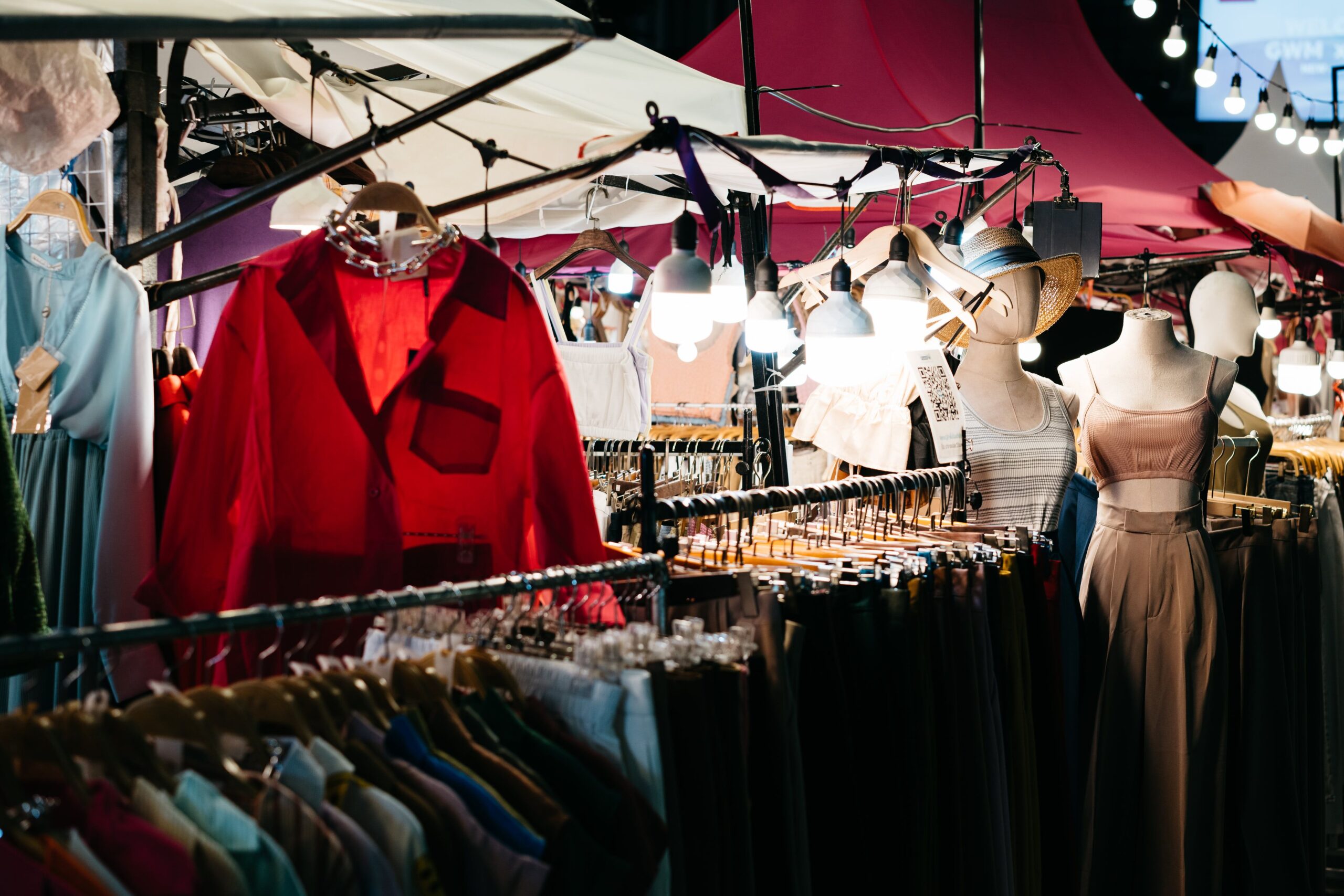

Foundations of Global Fashion Marketing
Introduction: A Garment Is Never Just a Garment
A shirt can cover the body.
A coat can protect someone from cold weather.
A shoe can support the foot.
A bag can carry personal belongings.
If these functional purposes fully explained why people bought fashion, the industry would be relatively straightforward. Manufacturers would compete primarily on durability, comfort, technical performance, availability and price. Consumers would compare specifications, select the most useful product and replace it only when it wore out.
But this is not how fashion works.
People replace clothes that remain physically usable. They desire garments that perform almost exactly the same practical function as garments they already own. They may reject technically excellent products because the silhouette feels dated, the colour communicates the wrong identity, the logo attracts the wrong audience or the brand has lost cultural relevance.
A person may pay ten times more for one handbag than another even when both can carry the same objects. A sneaker may become more desirable because it is difficult to obtain. A jacket can become commercially powerful because an artist, athlete, subculture or community gives it meaning. A design can move from obscure to fashionable, from fashionable to oversaturated, and from oversaturated to embarrassing without undergoing any physical change.
This tells us something fundamental:
Fashion is not simply a product category.
It is a social language carried by products.
It exists where material utility, aesthetic judgment, bodily experience, cultural meaning, personal identity, social recognition, commercial timing and collective imagination meet.
That is why fashion cannot be marketed like detergent, industrial equipment, office stationery or an ordinary household appliance.
The fashion marketer is not merely communicating what an item does. The marketer is helping people understand what the item means, who it is for, what kind of life it belongs to, how it should be worn, why it matters now and what purchasing it allows the customer to become.
This does not mean function is irrelevant. Fit, comfort, quality, durability, material performance and construction remain essential. But fashion value is rarely created by function alone.
Fashion value emerges through an interaction between:
The physical object.
The body that wears it.
The person who interprets it.
The people who observe it.
The culture surrounding it.
The moment in which it appears.
The brand system that frames it.
The market mechanisms that distribute it.
The marketing of fashion must therefore do more than generate awareness and stimulate transactions. It must coordinate meaning across a complete system.
This chapter explains why.
PART ONE
THE NATURE OF THE FASHION PRODUCT
- Fashion Is Both a Material Object and a Symbolic Object
Every fashion product has at least two lives.
Its first life is physical.
It has fibres, fabric, seams, colour, weight, texture, dimensions, hardware, construction techniques and measurable performance characteristics. It can be inspected, touched, worn, cleaned, repaired and eventually discarded.
Its second life is symbolic.
It may communicate professionalism, rebellion, wealth, restraint, sexuality, cultural belonging, artistic taste, athletic competence, political conviction, modesty, modernity, nostalgia or membership in a particular social world.
Consumers do not necessarily articulate these meanings consciously. A person may simply say, “This feels like me,” “This is not my style,” or “I would never wear that.” Yet these statements often contain complex judgments about identity, status, social compatibility and desired self-presentation.
Research into symbolic consumption has long shown that people use products not only for practical purposes but also to construct, express, defend and differentiate their identities. Fashion is especially powerful in this regard because it is worn directly on the body and displayed in social environments. Consumers may also reject products because of the identities, groups or meanings associated with them, not because of deficiencies in the products themselves.
This creates an important difference between fashion and many ordinary goods.
A refrigerator can be socially visible, but it usually remains inside a home.
A garment moves with the wearer.
It enters offices, schools, restaurants, religious spaces, airports, celebrations, photographs, social-media feeds and intimate encounters. It becomes part of how the person is read by others.
Fashion marketing must therefore answer two sets of questions simultaneously.
The material questions:
What is the product made from?
How is it constructed?
How does it fit?
How does it perform?
How long will it last?
How should it be cared for?
The symbolic questions:
What kind of person does this product represent?
What social situations does it belong to?
What cultural references does it carry?
What emotions should it create?
Who will recognise its meaning?
What does owning it say about the customer?
A weak fashion brand answers only the first group.
A superficial fashion brand answers only the second.
A great fashion brand integrates both.
- Fashion Is Worn on the Body
Fashion is not merely observed. It is inhabited.
The customer must place the product on the body and experience the relationship between material, shape, movement and self-perception.
This makes the fashion purchase unusually personal.
A chair may fail to suit a room. A garment may appear to fail the person.
When a dress does not fit, the consumer may not interpret the problem as a mismatch between a technical pattern and a particular body. She may experience it emotionally: as disappointment, exclusion, embarrassment or dissatisfaction with herself.
A product page can describe a fabric accurately and still fail to communicate how it will feel against the skin. A size label can be technically correct within a brand’s system and still be meaningless to a consumer accustomed to another system. A photograph can show the product beautifully while leaving the shopper uncertain about proportion, drape, transparency, movement and fit.
This is one reason online fashion retail faces a distinctive information problem. Research has found that the inability to touch garments can increase uncertainty about quality and reduce consumers’ willingness to buy online. Detailed close-ups, visualisation tools, fit information and other sensory-enabling technologies can reduce some of that uncertainty, but they do not fully reproduce physical experience.
Size and fit create an additional difficulty. Academic research consistently identifies poor fit as a leading cause of apparel returns, while fashion return rates can substantially exceed those of many other product categories.
For marketers, this means that representation is not only a communications question. It is part of product information.
Customers need to see:
Different body shapes.
Different heights.
Different skin tones.
Different ways of styling the item.
The garment while standing, sitting and moving.
The product in realistic lighting.
Close-up details of texture and construction.
The measurements of the garment itself.
The measurements of the models wearing it.
An explanation of whether the fit is close, relaxed, structured, oversized, cropped or elongated.
A photograph should not merely make the garment look desirable. It should help the customer imagine the garment truthfully.
The fashion marketer is therefore partly an interpreter between the garment and the body.
- Fashion Sits Between Belonging and Differentiation
People use fashion to belong.
They also use it to stand apart.
This apparent contradiction is one of the engines of the industry.
A person may dress like members of a professional community because shared codes create legitimacy and trust. The same person may introduce subtle differences in colour, tailoring, accessories or brand selection to maintain individuality.
A teenager may adopt the visual language of a music scene to signal membership. Within that scene, highly informed participants may distinguish themselves through rare references, older pieces or combinations that outsiders cannot easily interpret.
Classical fashion theory frequently describes this tension between imitation and distinction. Georg Simmel viewed fashion as a social process in which individuals seek both group inclusion and personal differentiation. As a style spreads, its meaning may weaken among early adopters, encouraging them to move towards something else.
The result is that fashion demand is interdependent.
People do not decide what to wear in complete isolation. They observe friends, colleagues, celebrities, designers, athletes, musicians, creators, competitors and strangers. They interpret what others are wearing and anticipate how others will interpret them.
This produces a form of social contagion.
Demand can grow because other people are adopting a look.
It can also collapse because too many people have adopted it.
The same popularity that makes a product commercially successful can eventually make it culturally ordinary. In certain categories, mass exposure increases legitimacy. In others, it destroys exclusivity.
Fashion marketing must therefore manage a difficult balance:
Enough visibility to create recognition.
Enough adoption to create relevance.
Enough scarcity to preserve desire.
Enough consistency to build memory.
Enough novelty to avoid stagnation.
This balance changes by category.
A school-uniform supplier benefits from standardisation.
A luxury house may depend on controlled accessibility.
A streetwear label may need subcultural credibility before mass growth.
A mass-market retailer may seek rapid diffusion.
An independent designer may benefit from being known by a small but influential community.
There is no universal optimum level of visibility. The correct level depends on what gives the brand its value.
- Fashion Value Is Socially Produced
Many ordinary products create value mainly through what the producer builds into them.
Fashion value is more distributed.
The designer contributes value.
The manufacturer contributes value.
The stylist contributes value.
The photographer contributes value.
The model contributes value.
The retailer contributes value.
The journalist contributes value.
The celebrity contributes value.
The community contributes value.
The customer contributes value by wearing and interpreting the product.
A garment can be technically identical before and after a culturally significant person wears it. Yet its desirability may change dramatically.
A shoe can gain meaning from its association with a sport, neighbourhood, musician or historical moment.
A simple piece may become important because people discover unexpected ways of styling it.
A vintage product can become more valuable because time, scarcity and cultural memory alter its interpretation.
This means fashion brands do not own meaning completely.
They propose meaning.
The market negotiates it.
Communities may accept, modify, amplify, parody or reject the brand’s intended message.
A brand may describe itself as rebellious while consumers perceive it as commercial.
It may seek luxury status while the market sees it as merely expensive.
It may present itself as inclusive while customers experience limited sizing.
It may claim craftsmanship while product inconsistency undermines the story.
It may become associated with a political or cultural identity it never intentionally pursued.
Fashion marketing is therefore not a one-directional act of sending messages. It is a continuous process of meaning management.
The strongest brands listen to how their products are being interpreted without surrendering their core identity every time public conversation changes.
- Fashion Is Temporally Perishable
Food can spoil physically.
Fashion can spoil culturally.
A garment may remain perfectly wearable while losing commercial value because the relevant season, trend, occasion or cultural moment has passed.
This creates one of the industry’s defining economic problems: fashion inventory is exposed to time.
A manufacturer of standard industrial components may be able to sell the same specification for several years. A fashion retailer may have only a few weeks or months to sell a particular colour, silhouette or print at full price.
When that window closes, the company may have to discount, transfer, store, repurpose, liquidate or dispose of the remaining inventory.
The danger begins long before the product reaches the shop.
Many products must be designed, sourced and ordered before the company knows exactly how consumers will respond. Fashion demand forecasting is difficult because assortments contain new products, styles have short life cycles and demand can vary sharply across stores, sizes and regions.
The marketer is therefore not operating after product development has finished.
Marketing decisions influence:
How much should be produced.
Which product should be treated as a hero.
Which style needs education.
Which item should be seeded with influential users.
Which market should receive which colour.
When the product should launch.
How long exclusivity should be preserved.
When scarcity should be maintained.
When replenishment should begin.
When markdowns would damage the brand.
A campaign that creates excitement after the relevant sizes have sold out wastes demand.
A campaign that overpromotes an uncertain product may generate inventory imbalance.
A discount event may solve a short-term stock problem while teaching customers to wait for lower prices.
For this reason, marketing, merchandising, buying, product development, planning and supply-chain management cannot behave as isolated departments.
Fashion marketing is partly the management of demand against time.
- Fashion Operates Under Aesthetic Uncertainty
Many product decisions can be evaluated against relatively stable criteria.
Does the machine meet the required output?
Does the medicine achieve the approved therapeutic effect?
Does the battery provide the stated capacity?
Fashion contains objective performance questions, but aesthetic judgment is less stable.
A colour can be considered unpleasant in one context and sophisticated in another.
An exaggerated proportion may initially appear ridiculous, then become directional, then desirable, then familiar and finally outdated.
A product may be commercially unsuccessful because it arrived too early, not because the idea was wrong.
Another may fail because it arrived after the market had become saturated.
Aesthetic value is shaped by context, framing and exposure.
This means fashion marketing sometimes has to teach the market how to see.
The marketer may need to establish:
Why an unfamiliar silhouette matters.
How a difficult product should be styled.
Which cultural reference gives the collection depth.
Why an apparently imperfect finish is intentional.
How a historical form has been reinterpreted.
Why a new proportion represents the future rather than poor fit.
This educational function is especially important for designer fashion, emerging aesthetics and products that challenge existing norms.
However, education must not become intellectual intimidation.
The purpose is not to make consumers feel culturally inadequate. It is to provide an entrance into the brand’s world.
Great fashion communication makes sophisticated ideas emotionally accessible.
- Price Does More Than Recover Cost
In many categories, price primarily communicates economic sacrifice.
In fashion, it may also communicate position.
A higher price can suggest better materials, superior construction, rarity, craftsmanship, design authorship, prestige, social status or cultural distinction. In luxury markets, price may operate partly as a signal because high cost limits access and makes ownership more visible as an economic or cultural achievement.
Research on luxury consumption shows that conspicuous and inconspicuous consumption can coexist. Some consumers seek visible logos and recognisable status markers. Others prefer subtle products whose significance is legible mainly to informed observers. Quiet luxury does not eliminate signalling; it often changes the audience to whom the signal is addressed.
This explains why fashion pricing cannot be treated as cost plus a standard margin.
Price must be aligned with:
Brand position.
Product quality.
Scarcity.
Distribution.
Competitor context.
Customer expectations.
Cultural legitimacy.
Resale behaviour.
Promotional frequency.
Service experience.
A luxury price with mass-market presentation creates disbelief.
A premium story followed by constant discounting creates mistrust.
A low price combined with highly elaborate claims about craftsmanship may feel implausible.
A high price is not automatically prestigious. It becomes credible only when the entire system supports it.
That system includes design, materials, store environment, packaging, service, availability, cultural presence, aftercare and consistency over time.
Price is therefore not merely what the customer pays.
It is part of what the product says.
- Fashion Carries Cultural Meaning
Fashion constantly draws from culture.
Designers use references from history, geography, religion, music, politics, art, uniforms, workwear, traditional craft and community dress.
This can produce dialogue, recognition and creative exchange.
It can also produce extraction.
A motif may not be an empty visual element. It may contain spiritual, historical, communal or political meaning. A technique may represent generations of knowledge. A form may be connected to a people whose work has repeatedly been copied without authorisation, acknowledgment or compensation.
The World Intellectual Property Organization recognises traditional cultural expressions as forms through which traditional culture is expressed, including designs, symbols, handicrafts, performances and other creative forms. WIPO has also developed guidance for fashion companies considering the use of Indigenous peoples’ traditional cultural expressions.
Cultural intelligence is therefore not optional for global fashion marketers.
Before using a cultural reference, a brand should ask:
What does this element mean within its community?
Who has authority to grant permission?
Is this element sacred, restricted or context-specific?
Will the originating community participate in authorship?
How will contributors be credited?
How will economic value be shared?
Is the collaboration long enough to be meaningful?
How will the brand respond if community members object?
The marketer must understand that visibility is not always compensation.
Credit is not always consent.
Inspiration is not always innocent.
A responsible fashion system moves from extraction towards partnership.
- Fashion Is an Intellectual-Property Business
Fashion value is often concentrated in intangible assets.
These include:
Brand names.
Logos.
Patterns.
Signature shapes.
Packaging.
Store design.
Photography.
Campaign films.
Creative concepts.
Product designs.
Collaborations.
Archives.
Reputation.
The WIPO identifies trademarks as central assets in fashion because brand names, logos, packaging and distinctive design elements help consumers identify the source of goods. Industrial-design rights, copyright, patents and contractual protections may also protect different parts of a fashion business, depending on the jurisdiction and product.
Marketing and intellectual property are closely connected.
Marketing creates recognition.
Recognition creates brand equity.
Brand equity makes imitation economically attractive.
Imitation can dilute distinctiveness, confuse consumers or damage reputation.
At the same time, fashion has always evolved through reference, reinterpretation and imitation. The commercial challenge is to distinguish legitimate cultural conversation from deceptive copying and unauthorised exploitation.
For fashion marketers, this requires more than legal registration.
It requires an evidence system.
The company should archive:
Design-development records.
Campaign concepts.
Original sketches.
Dates of use.
Supplier contracts.
Creator agreements.
Licensing terms.
Collaboration permissions.
Product photographs.
Market launches.
Brand guidelines.
Without documentation, the business may struggle to defend the very meaning its marketing created.
- Fashion Is a System, Not an Isolated Product
A fashion product enters the market through a network.
The network may include:
Fibre producers.
Textile mills.
Dyeing and finishing facilities.
Trim suppliers.
Garment manufacturers.
Logistics providers.
Wholesalers.
Marketplaces.
Department stores.
Boutiques.
Franchisees.
Agents.
Creators.
Stylists.
Media organisations.
Technology platforms.
Resellers.
Repair services.
Rental companies.
Collectors.
Every participant can influence how the product is understood.
A beautifully positioned brand can be weakened by poor retail presentation.
A luxury product can lose credibility when sold through uncontrolled discount channels.
A sustainability claim can collapse when the brand cannot trace its suppliers.
A product designed for longevity can be marketed through language encouraging disposability.
Global garment and footwear supply chains are particularly complex, often involving labour-intensive production across multiple countries, short lead times and numerous tiers of suppliers. The OECD’s sector guidance places responsibility on companies to identify, prevent, mitigate and account for adverse impacts throughout these relationships.
Marketing is therefore connected to sourcing.
A claim about quality depends on production control.
A claim about craft depends on truthful attribution.
A claim about responsibility depends on due diligence.
A claim about scarcity depends on production decisions.
A claim about local production depends on definitions and evidence.
The product story cannot be separated from the product system.
PART TWO
WHY CONVENTIONAL MARKETING OFTEN FAILS IN FASHION
- The Feature-Led Marketing Failure
Conventional product marketing often begins with features.
The fashion version may sound like this:
Made from premium cotton.
Features a concealed zip.
Available in four colours.
Includes two side pockets.
Designed for comfort.
These facts may be useful, but they rarely create a compelling fashion proposition by themselves.
Customers need to understand not only what the garment contains, but what role it plays.
Is it the disciplined foundation of a working wardrobe?
Is it a statement piece for ceremonial occasions?
Is it a technical garment for urban movement?
Is it a deliberately imperfect object influenced by deconstruction?
Is it a relaxed uniform for creative professionals?
Is it an heirloom intended to improve with age?
Features should prove the proposition.
They should not replace it.
“Made from heavy cotton” becomes more meaningful when connected to a benefit and worldview:
The fabric gives the garment enough structure to hold its architectural shape.
The material will soften through wear while retaining its form.
The weight creates a sense of protection and permanence.
The customer moves from specification to experience.
That movement is where fashion marketing begins.
- The Demographic Segmentation Failure
Age, income, gender and geography are useful, but they rarely explain fashion behaviour completely.
Two consumers of the same age and income may have radically different relationships with clothing.
One wants simplicity and buys a limited uniform.
Another treats dressing as creative experimentation.
One purchases luxury products to display achievement.
Another rejects visible branding and values rare materials.
One follows trends quickly.
Another waits until a trend becomes socially established.
One wants global fashion.
Another prioritises local identity.
One buys for longevity.
Another buys for novelty.
Demographic data tells us who people are in administrative terms.
Fashion marketing must also understand who they are trying to become.
Useful fashion segmentation may consider:
Identity projects.
Life transitions.
Style confidence.
Social environment.
Cultural reference points.
Fashion involvement.
Occasion structure.
Sensitivity to novelty.
Need for distinction.
Need for belonging.
Attitude towards the body.
Relationship with status.
Relationship with price.
Ethical expectations.
Shopping behaviour.
A customer may behave differently across occasions.
The same person can be conservative at work, expressive at social events, technical during exercise and ceremonial at family gatherings.
The unit of analysis is not always the person.
Sometimes it is the person in a particular life situation.
- The Promotion-Led Growth Failure
Discounting can produce immediate transactions.
It can also retrain the market.
When promotions become predictable, customers learn to delay purchasing. Full-price demand weakens. The initial price starts to feel fictional. The product becomes a temporary obstacle on the way to the “real” sale price.
This is especially dangerous for brands whose value depends on prestige, scarcity or timelessness.
Frequent markdowns may communicate:
The brand overproduces.
The assortment was poorly selected.
Demand is weaker than claimed.
The product was never worth the initial price.
The customer who paid full price made a mistake.
Promotions are not always destructive. They can be useful for planned customer acquisition, private clienteling, end-of-season management, market entry or carefully controlled inventory clearance.
The danger appears when promotion becomes the company’s primary marketing idea.
Strong fashion marketing builds reasons to buy beyond price:
Design relevance.
Emotional attachment.
Identity fit.
Product performance.
Cultural credibility.
Scarcity.
Service.
Community.
Collectability.
The goal is not to eliminate commercial incentives. It is to prevent incentives from becoming the brand’s identity.
- The Campaign-Without-Product Failure
Fashion campaigns can be visually spectacular.
But imagery cannot permanently rescue a weak product.
A campaign may generate attention while the assortment lacks coherence. The hero image may feature a piece that is unavailable in key markets. The advertisement may promise craftsmanship that customers cannot see in the construction. The brand may create a powerful universe that disappears on the product page.
This produces a dangerous gap between desire and delivery.
Fashion marketing must operate across the entire customer journey:
The campaign introduces the world.
The product page explains the object.
The store allows discovery.
The fitting experience resolves bodily uncertainty.
The service interaction confirms the brand’s values.
The packaging extends the experience.
The product’s performance justifies the promise.
The aftercare system protects the relationship.
The resale or repair experience influences long-term value.
The campaign is not the brand.
It is one doorway into the brand.
- The Universal-Globalisation Failure
A fashion brand can be globally consistent without being culturally identical everywhere.
Colours, symbols, modesty expectations, body ideals, climate conditions, religious practices, sizing systems, shopping habits, media platforms and social occasions vary across markets.
A product may be understood as casual in one country and formal in another.
A silhouette may appear contemporary in one city and inappropriate in another.
A campaign celebrated as provocative in one market may be experienced as disrespectful elsewhere.
Global fashion marketing therefore requires translation at the level of meaning, not merely language.
The question is not:
How do we reproduce the same campaign everywhere?
The better question is:
Which elements of the brand must remain fixed, and which elements should be interpreted locally?
The fixed elements might include:
Purpose.
Design philosophy.
Quality standards.
Visual codes.
Core attitude.
Ethical principles.
The adaptable elements might include:
Styling.
Talent.
Media channels.
Climate relevance.
Occasion framing.
Language.
Cultural references.
Retail timing.
Local partnerships.
Great global brands protect the centre while allowing intelligent variation at the edges.
- The Attention-Equals-Value Failure
Fashion operates in an attention economy, but attention is not identical to brand value.
A controversial product may attract millions of views while weakening trust.
A celebrity placement may create awareness among people who will never enter the category.
A viral item may overshadow the brand’s core assortment.
An influencer campaign may generate engagement without producing credible association.
A highly visible logo may increase recognition while making the brand less desirable to its most valuable customers.
Marketing performance should therefore be evaluated through the quality of attention.
Useful questions include:
Who noticed?
What did they understand?
What did they remember?
Did the exposure strengthen the intended position?
Did it attract the right customer?
Did it improve full-price demand?
Did it create repeat behaviour?
Did it deepen cultural authority?
Did it increase dependence on novelty?
Influencer research shows that creators can affect engagement and purchase intention, sometimes more effectively than brand-generated posts or traditional celebrity endorsements. However, effectiveness varies according to the influencer, message, platform, audience and product context.
The implication is not that every fashion brand should use influencers.
The implication is that influence must be designed, not merely purchased.
PART THREE
THE DIFFERENT OPERATING SYSTEM FASHION MARKETING REQUIRES
- Begin With Meaning Architecture
Before choosing advertising channels, a fashion company should define its meaning architecture.
Meaning architecture is the system that answers:
What does this brand stand for?
What emotional territory does it occupy?
What kind of person recognises herself in it?
What tension in the culture does it address?
What aesthetic principles guide it?
What must never change?
What is the brand’s relationship with time?
What forms of status does it support or reject?
What world does it invite people to enter?
A useful architecture has several layers.
The functional promise
What does the product reliably do?
The emotional promise
How should the customer feel?
The identity promise
Who can the customer become through the brand?
The social promise
How does the product help the customer participate in a group or situation?
The cultural promise
What larger ideas, histories or creative territories does the brand engage?
The ethical promise
What responsibilities does the company accept in creating and selling the product?
When these promises align, the brand becomes legible.
When they contradict one another, marketing becomes increasingly expensive because every campaign must fight against confusion.
- Conduct Consumer Anthropology, Not Only Consumer Research
Traditional research often asks customers what they like.
Fashion intelligence must also study what people do, imitate, avoid, preserve, combine and reinterpret.
Consumers may not be able to explain why a proportion suddenly feels current. They may deny being influenced by others while making decisions deeply shaped by social observation.
Fashion research should therefore combine:
Interviews.
Wardrobe studies.
Retail observation.
Social listening.
Search behaviour.
Resale data.
Return reasons.
Styling analysis.
Street observation.
Community conversations.
Cultural research.
Historical comparison.
Competitor analysis.
The objective is not simply to identify trends.
It is to understand the forces beneath them.
A useful trend diagnosis asks:
What social condition is this look responding to?
Is the customer seeking protection, freedom, nostalgia, optimism, seriousness or escape?
Which communities adopted it first?
What visual codes make it recognisable?
What barriers may prevent wider adoption?
Can the idea move between cultures?
Is it a temporary styling phenomenon or a deeper change in lifestyle?
Which products can express it without becoming costume?
The fashion marketer should distinguish signal from noise.
A signal indicates an underlying shift.
Noise is merely visible activity.
- Segment by Identity, Occasion and Fashion Behaviour
A powerful segmentation system should help the company make decisions.
It should influence:
Design.
Assortment.
Pricing.
Content.
Channels.
Service.
Geography.
Inventory.
A brand might segment customers according to fashion behaviour:
The early interpreter
Seeks emerging ideas and cultural novelty.
The confident curator
Knows her style and purchases selectively.
The social validator
Values recognisable brands and peer approval.
The practical aesthete
Wants beauty but requires functionality.
The status navigator
Uses fashion to communicate achievement or access.
The ethical investigator
Examines sourcing, durability and impact.
The occasion-led buyer
Enters the market around specific events.
The value optimiser
Balances price, quality and versatility.
These are not fixed human types. A customer may occupy different roles in different categories.
The important question is whether the segmentation improves the company’s ability to serve real needs.
- Position the Brand in a Cultural Territory
Positioning is often reduced to a sentence comparing a company with competitors.
Fashion positioning must go further.
The brand needs a cultural territory.
A cultural territory is a recognisable world of ideas, aesthetics, behaviours and values that the brand can inhabit consistently.
Examples of territories might include:
Modern ceremonial dressing.
Intelligent urban utility.
Romantic craftsmanship.
Radical minimalism.
Diasporic elegance.
Technical outdoor performance.
Quiet professional authority.
Youthful experimentation.
Playful domestic luxury.
A strong territory is wide enough to generate many collections but narrow enough to remain distinctive.
The test is not whether the territory sounds attractive.
The test is whether the brand can own it credibly.
Credibility may depend on:
Founder history.
Design capability.
Geographic roots.
Technical knowledge.
Community relationships.
Product evidence.
Creative consistency.
A brand should not claim cultural authority it has not earned.
- Treat the Assortment as a Portfolio of Roles
Not every fashion product performs the same commercial function.
The assortment should contain deliberate roles.
The icon
A recognisable product that concentrates brand memory.
The entry product
A more accessible route into the brand.
The image product
A directional item that earns attention even if volume is limited.
The volume product
A commercially dependable item serving broad demand.
The authority product
A product that demonstrates technical, creative or craft capability.
The continuity product
A stable item that remains available over time.
The seasonal product
An item designed around a temporary moment or climate.
The community product
A product connected to a collaboration, event or cultural group.
The collector product
A limited object whose value depends on rarity or historical relevance.
Marketing should understand these roles.
A runway piece should not always be judged by direct sales alone. It may provide creative authority that raises the perceived value of simpler products.
An entry product should not become so dominant that the brand is reduced to its cheapest item.
An icon should evolve carefully enough to remain alive without losing recognisability.
The assortment is not just inventory.
It is the vocabulary through which the brand speaks.
- Build a Fashion Pricing Architecture
A pricing architecture explains the relationship between products, not merely the price of each item.
It should establish:
The entry point.
The core price level.
The premium level.
The exceptional level.
The logic behind differences.
The customer should be able to understand why one item costs more.
Reasons may include:
Material quality.
Construction complexity.
Limited production.
Artisanal work.
Technical innovation.
Customisation.
Licensing.
Special provenance.
Service.
A pricing architecture also determines how customers move through the brand.
Can a new customer begin with an accessible product and gradually enter higher-value categories?
Does the entry product still express the brand’s standards?
Do premium products feel meaningfully superior?
Does the brand preserve price integrity?
Pricing should also consider the product’s life beyond the first transaction.
Strong resale values can reinforce perceptions of durability, scarcity and continuing relevance. Weak resale performance may reveal overproduction, low desirability or poor quality, although resale dynamics differ greatly by category.
The wise fashion marketer watches the secondary market not only as competition but as a source of brand intelligence.
- Choreograph Distribution
Distribution is communication.
Where a product is sold influences what it means.
A product presented in a respected concept store gains contextual authority.
A luxury product placed next to indiscriminately discounted merchandise may lose prestige.
A direct-to-consumer website gives the brand control but requires the company to create its own traffic, service and trust.
A marketplace provides reach but may weaken control over presentation, pricing and customer data.
Wholesale can expand visibility but exposes the brand to buyers’ assortment decisions.
Pop-ups can create urgency and physical discovery.
Private appointments can reinforce intimacy and exclusivity.
Distribution strategy should answer:
Who should be able to buy the product?
Where should discovery happen?
How much explanation does the product require?
Does the customer need touch and fitting?
Which retailers strengthen the brand’s position?
How much scarcity is real?
How much geographic expansion can operations support?
How will prices remain consistent?
What should never appear in an outlet?
Channel conflict is not merely an operational problem. It is a meaning problem.
When the same product appears at radically different prices in different places, the customer becomes uncertain about its true value.
- Replace Campaign Thinking With Narrative Systems
A campaign has a beginning and an end.
A narrative system continues.
It allows the brand to tell different stories while remaining recognisable.
A complete fashion narrative system may include:
The founding story.
The design philosophy.
The material story.
The maker story.
The cultural story.
The wearer story.
The product-use story.
The care and repair story.
The archive story.
The future story.
These stories should not all be told at once.
The customer should discover them progressively.
At first contact, the message must be simple enough to enter.
As interest deepens, the world should become richer.
This creates layers of meaning:
Recognition for the casual observer.
Relevance for the active shopper.
Depth for the committed customer.
Knowledge for the collector.
The most sophisticated brand is not necessarily the one that says the most.
It is the one whose details continue to reward attention.
- Show the Product Truthfully
Fashion imagery has two responsibilities.
It must create desire.
It must reduce uncertainty.
These responsibilities sometimes conflict.
Highly stylised imagery can make a garment emotionally powerful while concealing its practical characteristics. Plain e-commerce photography can communicate details while removing all imagination.
A complete visual system therefore needs different image types.
Campaign imagery creates atmosphere.
Lookbook imagery communicates styling.
Runway imagery communicates collection context.
Product imagery communicates shape and detail.
Movement imagery communicates drape.
Close-up imagery communicates material and construction.
Customer imagery communicates real-life interpretation.
Fit imagery communicates bodily relationship.
The marketer should never expect one photograph to perform every function.
Truthful product communication should include limitations where relevant.
Is the fabric delicate?
Is the colour likely to vary?
Is the garment intentionally oversized?
Does it require specialist cleaning?
Is the material transparent under strong light?
Does the item have natural irregularities?
Honesty does not necessarily reduce desire.
For the correct customer, precision increases confidence.
- Turn Retail Into Interpretation
A fashion store is not simply a warehouse with attractive furniture.
It is a medium.
The store explains the hierarchy of the collection, the relationship between products and the type of behaviour the brand expects.
Space, scent, sound, lighting, architecture, staff clothing and product density all contribute to meaning.
A crowded environment may communicate abundance and discovery.
A sparse environment may communicate importance and contemplation.
Neither is automatically superior.
The correct environment depends on the brand.
Retail employees are especially important because they translate abstract brand values into human interaction.
A customer may forget campaign copy but remember whether she felt welcomed, judged, understood or ignored.
Fashion service should help without removing autonomy.
The strongest staff members do not merely push products. They read situations.
They understand:
Fit.
Fabric.
Styling.
Occasion.
Care.
Alteration.
Customer confidence.
Cultural sensitivity.
When retail employees are treated as low-level sales labour, the brand loses one of its most intelligent communication channels.
- Build Communities Without Manufacturing False Intimacy
Fashion has always formed communities.
Digital platforms have made those communities more visible and commercially accessible.
But a following is not automatically a community.
A community has relationships, shared codes, participation, memory and some degree of mutual recognition.
Brands frequently use the language of community while treating people as a distribution list.
Real community building may involve:
Listening sessions.
Local events.
Creative workshops.
Customer styling.
Member access.
Repair gatherings.
Cultural programmes.
Design participation.
Support for emerging talent.
Long-term creator partnerships.
The goal should not be to control every conversation.
Healthy communities create meanings the company did not fully plan.
The brand’s task is to provide a strong centre, useful resources and respectful boundaries.
- Use Influence as Cultural Translation
The most useful fashion influencers do more than display products.
They interpret them.
They show how an item enters a life, a wardrobe, an occasion or a cultural conversation.
This is why follower count alone is a weak selection criterion.
A creator should be evaluated according to:
Audience relevance.
Aesthetic compatibility.
Trust.
Cultural position.
Styling ability.
Communication quality.
Past commercial behaviour.
Geographic influence.
Community relationship.
Capacity to explain the product.
A small creator may produce stronger commercial results than a larger personality because the audience understands why the creator has chosen the product.
The partnership should also be legible.
Why does this person belong with this brand?
If the answer is only payment, the collaboration may feel empty.
The strongest partnerships create something neither party could have produced alone.
- Make Sustainability a Product Discipline, Not a Campaign Theme
Fashion sustainability cannot be solved through vocabulary.
Terms such as conscious, responsible, green, natural, circular and eco-friendly can create an impression without communicating a precise environmental benefit.
Regulators increasingly expect environmental claims to be specific, substantiated and presented in ways that do not mislead consumers. The United States Federal Trade Commission advises marketers against broad, unqualified environmental claims. The United Kingdom’s Competition and Markets Authority has issued fashion-specific guidance following investigations into major retailers’ green claims.
A credible claim should answer:
What exactly improved?
Compared with what?
Which part of the product is covered?
Which stage of the life cycle is included?
What evidence supports the statement?
Which limitations remain?
Who verified the information?
A product made with recycled material is not automatically sustainable in every respect.
A durable product may still have problematic labour conditions.
Local production does not automatically mean low environmental impact.
Natural materials are not automatically benign.
Recyclable does not mean the item will actually be recycled.
Fashion marketing must resist the temptation to transform partial improvement into total virtue.
The European policy direction also shows that sustainability information is moving closer to product infrastructure. The EU’s textiles strategy envisions more durable, repairable and recyclable products, clearer information, digital product passports and measures addressing overproduction and unsold goods.
This changes the marketer’s role.
Tomorrow’s fashion marketer may need to communicate not only mood and identity but also:
Material composition.
Repairability.
Production origin.
Environmental evidence.
Care requirements.
End-of-life options.
Product authenticity.
The marketing department must become capable of working with scientific, operational and legal information without making the brand experience lifeless.
Sustainability communication should add truth to desire, not remove desire from the product.
UNEP and UN Climate Change’s Sustainable Fashion Communication Playbook similarly argues for communication that supports more sustainable lifestyles rather than simply using environmental language to stimulate additional consumption.
- Market Longevity, Not Only Newness
Fashion has historically rewarded novelty.
New collection.
New season.
New drop.
New collaboration.
New colour.
Newness creates attention, but permanent dependence on newness creates strategic weakness.
A brand that can only generate demand through constant novelty must continuously increase creative, production and communication intensity.
Longevity offers another form of value.
A product can remain desirable because it becomes:
Familiar.
Trusted.
Repairable.
Collectable.
Adaptable.
Historically significant.
Emotionally attached to the owner.
Marketing longevity does not mean eliminating creative change.
It means creating multiple relationships with time.
Some products introduce the future.
Some preserve continuity.
Some return from the archive.
Some improve through wear.
Some can be repaired.
Some become valuable because they survived.
A sophisticated brand does not treat every older product as a failure of novelty.
- Design for Local Meaning Within a Global System
Global fashion strategy should operate at three levels.
The universal level
Human needs that cross markets: protection, attraction, recognition, dignity, belonging, self-expression and comfort.
The cultural level
Shared meanings shaped by history, religion, media, class, ethnicity, climate and social institutions.
The individual level
Personal taste, body, memory, aspiration and circumstance.
Global campaigns fail when they assume the universal level is the only one that matters.
Hyperlocal campaigns fail when they lose the brand’s global identity.
A disciplined localisation process asks:
What does this product mean here?
Which occasions create demand?
Which styling codes are locally intelligible?
Which body and sizing realities must be addressed?
Which people have authority in this cultural context?
Which references require consultation?
Which channels shape taste?
Which global elements should remain untouched?
Local teams should not merely execute headquarters’ instructions.
They should contribute intelligence to the global brand.
- Measure Meaning as Well as Transactions
Sales data tells the company what sold.
It does not always explain why.
Fashion marketing measurement should connect cultural signals with commercial outcomes.
Useful commercial measures include:
Full-price sell-through.
Gross margin.
Markdown dependence.
Return rate.
Repeat purchase.
Customer acquisition cost.
Lifetime value.
Average order value.
Channel profitability.
Size-level availability.
Useful brand measures include:
Unaided awareness.
Distinctive-asset recognition.
Perceived quality.
Price credibility.
Purchase consideration.
Cultural relevance.
Association with intended values.
Customer trust.
Useful community measures include:
Quality of participation.
Organic styling.
Customer advocacy.
Creator retention.
Event attendance.
User-generated interpretation.
Useful product measures include:
Fit satisfaction.
Wear frequency.
Repair activity.
Care complaints.
Resale performance.
Product longevity.
A viral campaign can be considered successful according to attention metrics and unsuccessful according to brand or margin metrics.
Measurement must reflect the real strategic objective.
- Integrate Marketing With Merchandising and Supply
In fashion, marketing cannot operate only as a communications department.
It must understand the merchandise plan.
Before launching a campaign, the marketing team should know:
Which products carry the collection.
Which sizes are available.
Which products have sufficient inventory.
Which markets received the assortment.
Which products have been reordered.
Which items are selling without support.
Which items require education.
Which products are experiencing return problems.
Which delivery dates are at risk.
This allows marketing investment to follow commercial reality.
The relationship should also work in reverse.
Marketing intelligence should inform product and buying teams about:
Emerging customer needs.
Repeated fit concerns.
Cultural reactions.
Unmet occasions.
Styling behaviour.
Product requests.
Price resistance.
Regional variation.
A fashion company becomes stronger when it treats demand creation and demand fulfilment as one conversation.
- Build the Calendar Around Cultural and Operational Time
The fashion calendar is not merely a list of campaign dates.
It coordinates several forms of time:
Design time.
Production time.
Delivery time.
Seasonal time.
Retail time.
Media time.
Cultural time.
Customer time.
A product may arrive at the correct logistical moment and the wrong cultural moment.
A campaign may launch during a crowded news cycle.
A ceremonial collection may appear after customers have already purchased for the occasion.
A cold-weather product may arrive after an unusually warm season has weakened demand.
The calendar should include:
Global and local holidays.
Religious observances.
School and work cycles.
Travel periods.
Wedding seasons.
Climate variation.
Fashion weeks.
Entertainment releases.
Sporting events.
Cultural festivals.
Pay cycles.
Retail promotions.
Internal production milestones.
The objective is not to exploit every event.
It is to understand when the brand can enter the customer’s life naturally.
PART FOUR
DIFFERENT FASHION CATEGORIES REQUIRE DIFFERENT MARKETING LOGICS
- Luxury Fashion
Luxury marketing must preserve distance while creating emotional proximity.
The customer should feel invited into the brand’s world without believing the world is ordinary.
Luxury value may be supported by:
Craft.
Heritage.
Design authorship.
Material rarity.
Scarcity.
Service.
Cultural authority.
Controlled distribution.
Recognition.
Exceptional experience.
The danger is confusing visibility with accessibility.
A luxury brand can be globally famous while remaining commercially selective.
It can communicate widely while distributing narrowly.
Luxury marketing often requires patience because brand prestige accumulates through consistency, historical memory and cultural endorsement.
Excessive licensing, uncontrolled expansion, overproduction and constant discounting may produce revenue while weakening the conditions that justify premium pricing.
- Designer and Premium Fashion
Designer and premium brands must translate creativity into understandable value.
They often occupy the difficult territory between artistic authority and commercial scale.
Their marketing must explain:
Why the design is distinctive.
How the product is constructed.
Why the price exceeds mass-market alternatives.
How the item can enter a real wardrobe.
The brand should avoid becoming so conceptual that customers cannot imagine wearing the product.
It should also avoid becoming so commercially cautious that its creative reason for existing disappears.
- Mass-Market Fashion
Mass-market fashion competes through relevance, accessibility, convenience and assortment competence.
Its marketing must help customers navigate abundance.
Important capabilities include:
Clear product categorisation.
Strong search and recommendation.
Reliable fit information.
Rapid content production.
Local assortment intelligence.
Competitive pricing.
Efficient availability.
Mass-market fashion still needs meaning.
Accessibility does not require cultural emptiness.
The brand can create recognisable taste, useful styling, inclusive representation and dependable product propositions without pretending to be exclusive.
- Fast and Ultra-Fast Fashion
Fast fashion compresses the distance between cultural signal and commercial availability.
Its strength is responsiveness.
Its risks include:
Overproduction.
Quality inconsistency.
Labour and supply-chain exposure.
Environmental impact.
Dependence on novelty.
Disposable customer relationships.
The rise of platform-based and ultra-fast models has intensified questions about supply-chain responsibility and the consequences of extremely compressed product cycles.
Marketing in this category cannot responsibly celebrate speed without examining what makes that speed possible.
The future competitive question will not simply be who can produce faster.
It will be who can combine responsiveness with accountability, information quality and reduced waste.
- Streetwear
Streetwear value frequently begins with community legitimacy.
The product may draw authority from music, sport, neighbourhood culture, art, collecting and peer recognition.
Scarcity, drops and collaboration can generate urgency, but these mechanisms lose power when used mechanically.
A drop matters when people care what is dropping.
A collaboration matters when the relationship produces cultural meaning.
Streetwear brands must protect the communities that gave them relevance. Scaling too quickly can separate the brand from its source of authority.
- Sports and Outdoor Fashion
Sports and outdoor products combine identity with measurable performance.
Marketing claims may be tested through use.
Customers want to know:
Does the product manage moisture?
Does it protect against weather?
Does it restrict movement?
How durable is it?
What conditions was it designed for?
Technical proof is important, but performance alone does not explain why sportswear becomes everyday fashion.
These categories also communicate discipline, energy, health, adventure and competence.
The strongest brands connect credible technical performance with a compelling human philosophy.
- Modest Fashion
Modest fashion should not be treated as a minor variation of mainstream fashion.
It involves specific relationships between faith, culture, comfort, coverage, style, climate and personal interpretation.
Marketing must avoid reducing diverse consumers to a single visual stereotype.
Useful considerations include:
Opacity.
Length.
Layering.
Breathability.
Movement.
Headwear compatibility.
Ceremonial context.
Local religious and cultural norms.
The customer may seek both religious alignment and contemporary style.
These should not be presented as opposing desires.
- Craft, Heritage and Indigenous Fashion
Craft-based brands often possess extraordinary stories but weak systems for converting those stories into durable commercial value.
Marketing should document:
The maker.
The technique.
The region.
The material.
The time involved.
The cultural meaning.
The ownership structure.
The economic relationship.
However, craft should not be marketed as frozen in the past.
Makers are not museum exhibits.
Tradition can innovate.
The central ethical question is whether the people who carry the knowledge retain authorship, dignity and economic participation.
- Resale, Rental and Circular Fashion
Resale changes the meaning of ownership.
The customer may purchase with future value in mind.
Rental separates access from permanent possession.
Repair extends product life.
These models require new trust systems:
Authentication.
Condition grading.
Cleaning standards.
Transparent pricing.
Product history.
Repair documentation.
Reliable logistics.
The original brand may benefit when a strong secondary market confirms continuing desirability.
It may also face challenges involving counterfeits, pricing and loss of direct customer relationships.
Circular fashion marketing must sell participation in a different value system without presenting every resale or rental transaction as automatically sustainable. The environmental result depends on behaviour, logistics, substitution and product use.
PART FIVE
A PRACTICAL FRAMEWORK FOR FASHION MARKETING LEADERS
- The Twelve Questions Every Fashion Strategy Must Answer
Question One: What human tension does the brand address?
Does it help customers balance comfort and authority, belonging and individuality, modesty and expression, heritage and modernity, utility and beauty?
Question Two: What is the product’s reason for existing?
Not why the company wants to sell it. Why does the customer’s world need it?
Question Three: What meaning should the product carry?
What should a customer feel and communicate by wearing it?
Question Four: Who has the authority to validate that meaning?
Designers, athletes, craftspeople, cultural communities, professionals, stylists, collectors or customers?
Question Five: What evidence makes the promise believable?
Materials, construction, provenance, performance, service, traceability or lived experience?
Question Six: What role does the product play in the assortment?
Icon, entry product, volume product, image product, continuity product or collector piece?
Question Seven: What relationship with time does the product have?
Immediate trend, seasonal relevance, long-term essential, archive object or future classic?
Question Eight: Where should the product be discovered?
Runway, boutique, marketplace, social platform, private appointment, event or community?
Question Nine: What uncertainty prevents purchase?
Fit, price, styling, quality, cultural appropriateness, delivery, authenticity or care?
Question Ten: What could damage the meaning?
Overexposure, discounting, poor quality, inappropriate partnerships, misleading claims or uncontrolled distribution?
Question Eleven: What happens after purchase?
Does the brand support care, styling, repair, resale, replacement and continuing participation?
Question Twelve: How will success be judged?
Attention, full-price demand, repeat purchase, margin, cultural authority, customer trust or product longevity?
- The Fashion Marketing Sequence
A disciplined fashion marketing process can follow this sequence.
First: Read the world
Study social change, cultural tension, customer behaviour and category movement.
Second: Define the meaning
Clarify the brand territory and product proposition.
Third: Build the object
Ensure design, material, fit and construction support the proposition.
Fourth: Design the evidence
Develop proof for quality, performance, provenance and responsibility.
Fifth: Select the interpreters
Identify the retailers, creators, stylists, communities and media capable of translating the product.
Sixth: Choreograph access
Determine availability, scarcity, pricing and distribution.
Seventh: Create desire
Use imagery, narrative, experience and participation.
Eighth: Resolve uncertainty
Provide accurate fit, product, delivery, care and service information.
Ninth: Observe adoption
Study who buys, how they wear the product and how meaning evolves.
Tenth: Protect long-term value
Manage quality, discounting, cultural legitimacy, intellectual property and product afterlife.
This sequence is more demanding than creating advertisements.
It is also more defensible.
- What Fashion Marketing Leadership Requires
The fashion marketing leader must be commercially rigorous and culturally awake.
The role requires fluency in:
Consumer psychology.
Brand strategy.
Visual culture.
Merchandising.
Retail.
Pricing.
Digital commerce.
Media.
Supply chains.
Regulation.
Data.
Culture.
The leader must be able to discuss a campaign with a photographer, inventory with a planner, fit with a technical designer, margin with finance, sourcing with procurement, cultural risk with community partners and environmental evidence with sustainability specialists.
No single person will master every discipline equally.
The responsibility of leadership is to connect them.
The greatest fashion marketers are not merely promoters.
They are system builders.
Conclusion: Fashion Marketing Is the Management of Meaning in Motion
Fashion is not ordinary because it does not remain still.
Its materials move across supply chains.
Its products move across bodies.
Its images move across media.
Its styles move across communities.
Its meanings move across cultures.
Its value moves across time.
A garment begins as fibre, fabric, labour and design. It becomes a photograph, a price, a promise and a possibility. It enters a store or appears on a screen. It meets a body. It is accepted or rejected. It is worn into a life. It is observed by others. It may become ordinary, treasured, copied, repaired, resold, archived or forgotten.
Marketing participates in every stage of that movement.
It tells the customer what deserves attention.
It frames how the product should be understood.
It creates the conditions in which unfamiliar forms become desirable.
It helps people recognise themselves in objects.
It can honour culture or exploit it.
It can communicate evidence or manufacture illusion.
It can strengthen product value or destroy it through overexposure.
It can stimulate endless replacement or help customers develop deeper relationships with what they own.
The ultimate task of fashion marketing is therefore not to make people buy clothing by any means available.
It is to create a truthful and compelling relationship between product, person, culture and time.
When that relationship is weak, the company must purchase attention repeatedly.
When it is strong, the brand enters memory.
People do not merely know the name.
They understand its world.
They recognise its codes.
They trust its standards.
They anticipate its next move.
They see themselves inside its possibilities.
That is when fashion stops behaving like inventory.
It becomes culture, identity and commercial value moving together.